
How to Select a Lab Stool
How to Select the Right Specialty Lab Stool
#1. Identify the application
The first step in choosing the right specialty lab stool involves understanding the usage scenario. Will it be used by an individual sitting for prolonged periods or will it be in an environment where users frequently transition between sitting and standing or moving to different workstations? This consideration is critical for selecting the ideal stool.

#2. Task Analysis
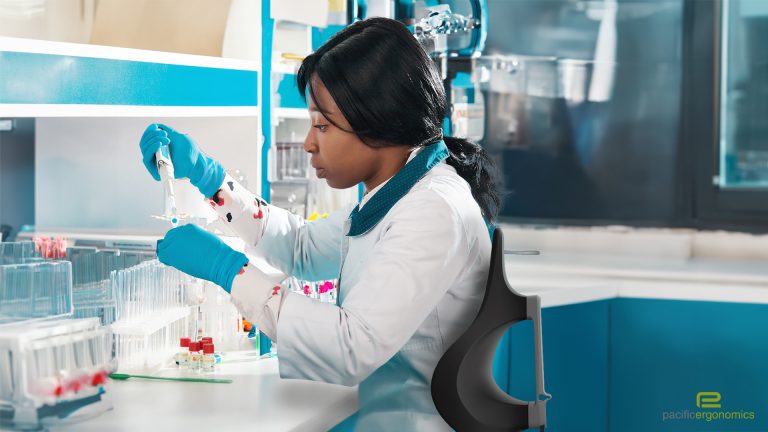
The nature of the tasks performed by the lab technician greatly influences the selection of the ideal specialty laboratory stool. Tasks may vary from leaning towards a microscope, performing pipetting activities, to stirring fluids, each requiring a different type of support and functionality from the stool.
#3. Bench Height Considerations
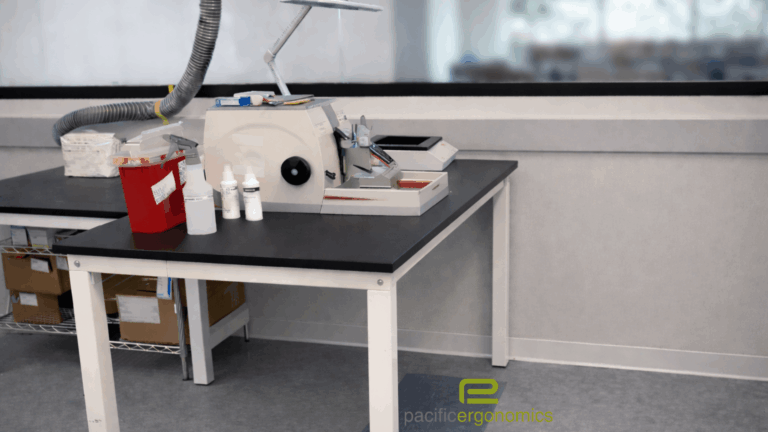
Assess the bench height in the working area. Is there sufficient space for comfortable foot placement, or is there a need for special seating solutions to accommodate limited or blocked footwells?
#4. Special Laboratory Stool Requirements
Consider whether your lab requires stools that meet specific conditions, such as those suitable for cleanroom environments, necessitating certain ISO Cleanroom ratings (ISO 1, 2, 3, etc.), or the need for stools with Electrostatic Discharge (ESD) protection.
#5. Cleanability and Exposure to Chemicals
Evaluate the laboratory conditions, especially the likelihood of chemical spills on stools and the cleaning protocols. The type of chemicals used for cleaning should inform the material selection for the stools to ensure durability and safety. There are specialty lab stools that can support clean rooms, ESD environments, fabrics that are ideal for cleaning and materials that are no vinyl and easier to clean.
#6. Adjustable Height Requirements
Consider if the specialty lab stool for your area need to transition between different heights, from chair to bench level. It’s important to choose stools with the right height range to match the specific requirements of the tasks and the workspace
#7. Will the specialty lab stools be moved from a chair height to a bench height, or will they serve one function?
-There are special solutions that can accommodate this need. Most stools have specific height ranges and this has to match the need of the task and the height of the bench.
#8. Accommodating Diverse Body Types
For labs with personnel who may have a body weight exceeding 350lbs or vary significantly in height and size, choosing stools with a sturdy base designed to support heavier loads without compromising on comfort or durability is crucial.
#9. Foot Support Solutions
Standard foot rings on lab stools can be uncomfortable, compressing the back of the legs. Opt for stools with advanced footrest options designed for better support and comfort.
#10. Shift and Usage
Understanding the shift patterns and the number of shifts that will use the lab stools is important, especially when considering warranty terms. Stools designed for multi-shift use might be more durable and suitable for high-frequency usage environments.
#11. Fume Hood Requirements
For lab technicians working at fume hoods without adequate footwell space, selecting the appropriate specialty lab stools is essential for comfort and task efficiency. There are forward sitting solutions that can bring comfort to your team.
For expert advice and a wide selection of specialty lab stools designed to meet various requirements, visit Pacific Ergonomics. Our showroom, located in Escondido, CA, near San Diego, Orange County, Riverside, and close to LA, offers comprehensive solutions for your laboratory seating needs. We also work with companies all over the U.S. to support their ergonomic lab stool and benching needs.