Why the Conference Chair You Pick Determines How Many People Fit at the Table
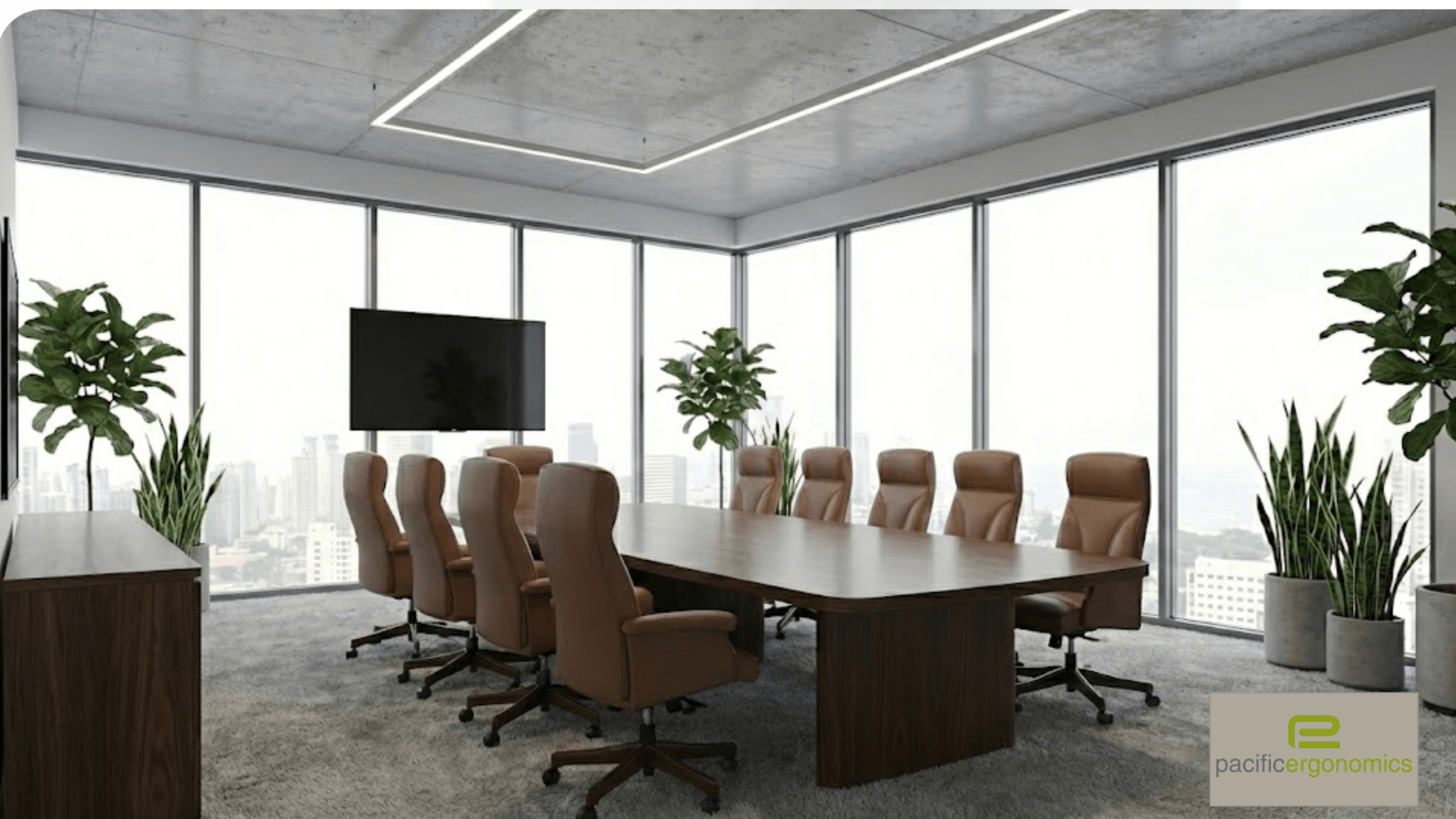
Conference room chair spacing is one of the most overlooked factors in conference room design. The table gets all the attention. But the chair determines how many people actually fit around it.
A 12-foot conference table does not automatically seat 12 people. It might seat 10 with executive chairs. Or 14 with armless side chairs. The difference is not the table. It is the chair.
Why Conference Room Chair Spacing Matters
Most conference room furniture begin with the table. Dimensions are chosen, a shape is selected, and chairs are added to a floor plan. The problem starts here.
Architectural floor plans frequently use chair symbols that are smaller than any real chair. The result looks great on paper. In practice, people are squeezed together, bumping elbows, and unable to pull their chairs back without hitting the wall.
The full width of the chair determines spacing. Not the seat pan. Not the backrest. The full width, including arms.
Conference Room Chair Spacing Guidelines
Chair Width by Type
- Armless side chair: 18 to 20 inches wide, 24 inches spacing per seat.
- Task chair with arms: 24 to 27 inches wide, 28 inches spacing per seat.
- Executive chair with arms: 26 to 30 inches wide, 30 inches spacing per seat.
- Large executive chair: 28 to 32 inches wide, 32 inches spacing per seat.
- Read our complete conference table design guidelines
The 30-Inch Baseline
When the final chair has not been selected, plan at 30 inches of table edge per seat. This accommodates most executive chair options without locking in a specific model too early.
This baseline is especially important in the early design phase when the table size is being determined. Committing to a table length based on a smaller chair, then selecting a wider chair later, creates a seating shortfall that is expensive to correct.
How Arms Change Conference Room Chair Spacing
Arms are the single biggest factor in chair width. An armless chair may be 19 inches wide. Add arms and the same conference room chair becomes 26 inches. That is 7 inches of additional width per seat.
Around a conference table seating 20 people, the difference between armless and armed chairs could be as much as 12 feet of total table perimeter. That is the difference between fitting 20 seats and fitting 16.
When to Choose Armed Chairs
Armed chairs belong in boardrooms and executive conference rooms where meetings run long. The arms provide support during extended sessions and contribute to a more formal, executive aesthetic.
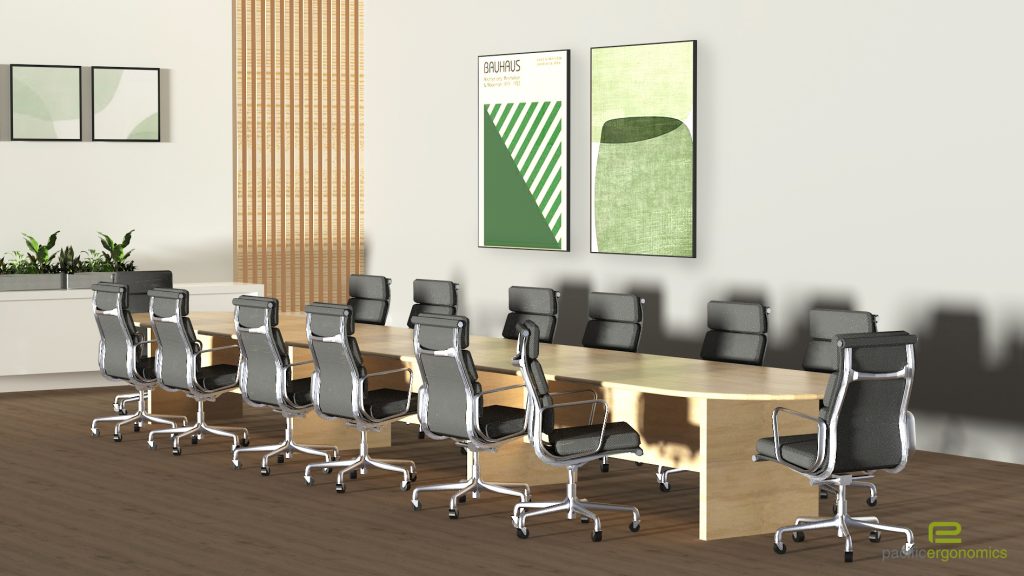
During all-day meetings, arms do more than support your elbows. They allow the user to lean back comfortably with full arm support. The chair almost hugs the person sitting in it. For eight-hour sessions, that comfort makes a real difference in focus and fatigue.
One important consideration: if the arms are not height adjustable, they must sit lower than the conference table surface. This should be confirmed before you procurement.
If the arms are too high, the chair cannot be pushed in and will hit the table edge. For chairs with adjustable arms, confirm that the arm clears the table at its highest setting. This is resolved during the specification process.
When to Choose Upholstered Arm Chairs
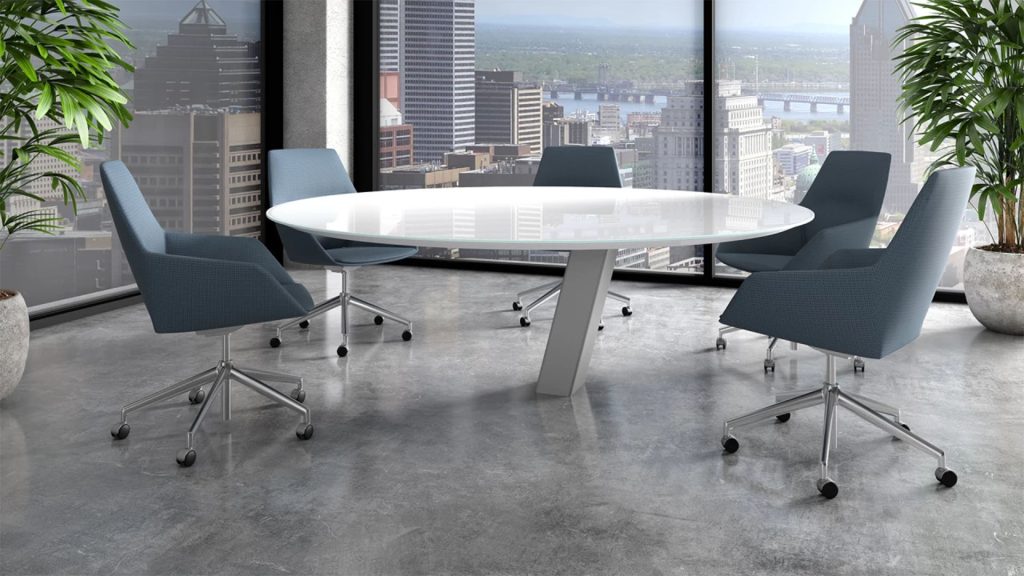
Upholstered arms offer a middle ground between adjustable arms and armless designs. The arm is integrated into the chair body. It looks like part of the chair, not a mechanical component. The result is a clean, modern, executive aesthetic that still provides arm support.
The key consideration: upholstered arms are fixed height. They must sit lower than the conference table surface or the chair will not push in. Confirm this measurement during specification. When the fit is right, upholstered arm chairs deliver comfort and style without the visual complexity of adjustable mechanisms.
When to Choose Armless Chairs
Armless chairs fit more seats into the same space. Modern Conference Chairs are ideal for quick meetings, training sessions, and huddle rooms where people are in and out. There is no concern about arms hitting the table edge, which simplifies specification. When seating capacity and flexibility matter more than all-day comfort, armless is the right choice.
Common Conference Room Chair Spacing Mistakes
- Using architectural symbols as real chair sizes. Floor plan symbols are often 16 to 18 inches wide. Real executive chairs are 26 to 30 inches. Always verify with actual chair dimensions.
- Forgetting clearance behind the chair. Allow at least 36 inches between the chair back (when pushed out) and the wall or credenza behind it. More if people need to walk behind seated participants.
- Specifying the table before the chair. The table size should be determined by how many chairs need to fit around it, not the other way around. Start with the seating count and chair width, then size the table.
- Mixing chair types without adjusting spacing. If the head of the table gets a larger executive chair while side seats use smaller models, the spacing at the head position needs to be wider.
Conference Room Chair Spacing FAQ
How much space does each person need at a conference table? Plan for 30 inches of table edge per person as a baseline when using executive chairs with arms. Armless chairs may allow 24 inches per person.
How do I know if my conference room chairs are too wide? If participants cannot sit down without bumping the person next to them, or if chairs cannot be pushed back 18 inches without hitting the wall, the spacing is too tight.
Should I choose the table or the chair first? Determine the seating count and likely chair type first. Then size the table to fit. The chair drives the table, not the other way around.
Does the table base affect seating? Yes. Panel bases, pedestal legs, and T-bases all affect where chairs can be placed. Some base styles restrict seating at certain positions. This is resolved during space planning.
Need Help Planning Your Conference Room Seating?
Chair selection, spacing, and table sizing are all part of our design consultation. We help you get the right count, the right comfort, and the right fit.
Learn how our design process works.
Contact Us for a free consultation on your next conference room project