Epoxy And Phenolic Microtome Tables Add Stability Laminate Can’t Match
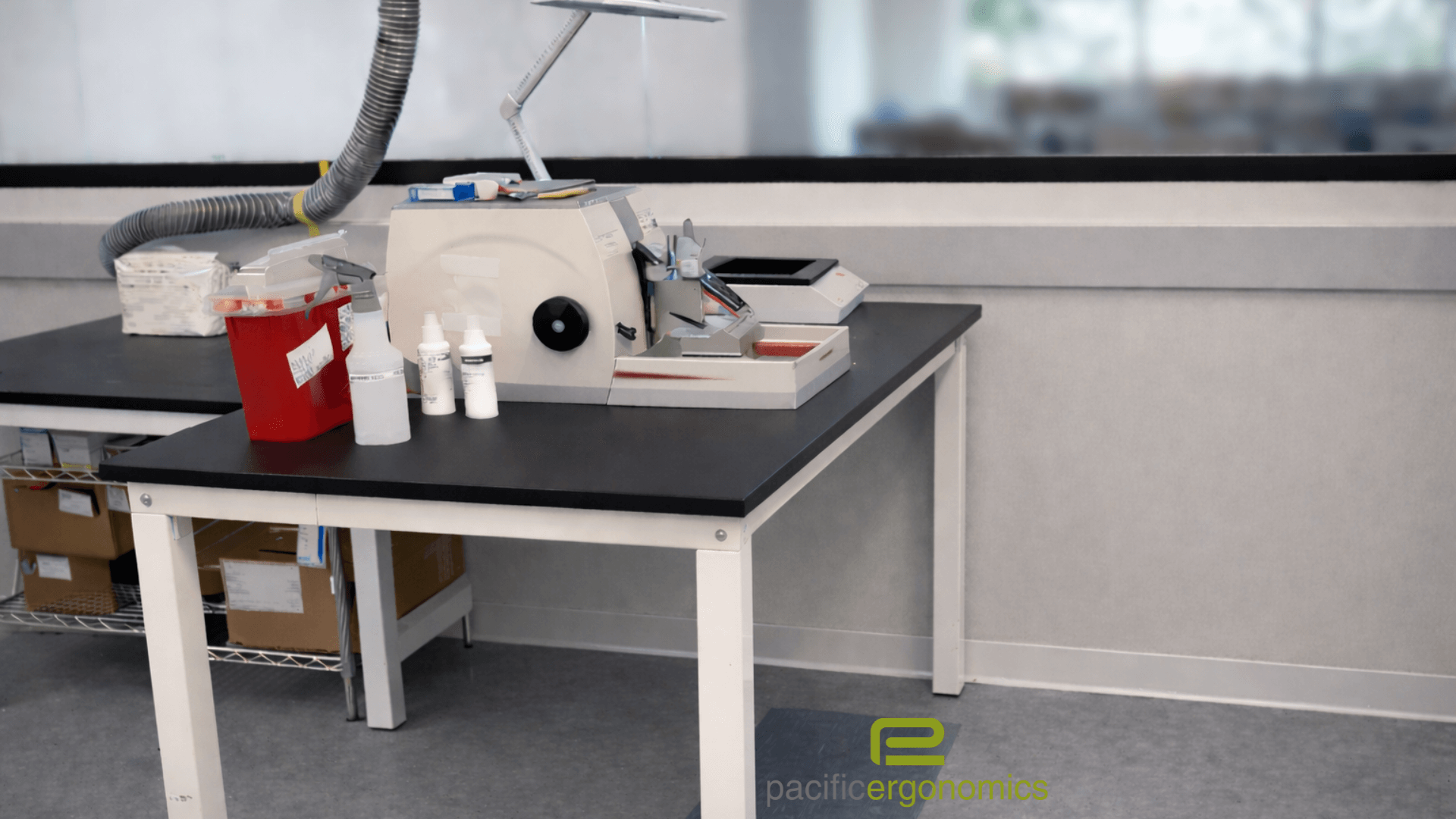
Microtome tables and height-adjustable sit stand microtome tables are subjected to some of the most demanding conditions in a laboratory. Between constant blade use, water baths, staining solutions, solvents, disinfectants, and daily cleaning protocols, the work surface must do far more than simply look good on day one.
This is where EPOXY and phenolic work surfaces offer a clear and measurable advantage over standard lab-grade laminate (HPL).
In pathology and histology labs, we consistently see microtome tables fail not from improper use, but from long-term moisture exposure beneath the surface.
The Reality of Microtome Work
Microtomy is a wet, precise, and repetitive process. Typical liquids used at or near a microtome table include:
-
Water from flotation baths
-
Alcohols and staining solutions
-
Xylene or xylene substitutes
-
Paraffin residue
-
Cleaning and disinfecting agents
Even in well-run labs with strong protocols, moisture exposure is unavoidable. Over time, this repeated exposure is what determines whether a microtome table holds up—or quietly deteriorates beneath the surface.
Why Some Labs Use Paper on Microtome Tables
Absorbs Immediate Moisture and Spills
During routine microtomy, water, melted paraffin, stains, and cleaning fluids are constantly present. Some labs that have laminate tables use paper to help:
-
Absorb splashes and drips as they occur
-
Reduce pooling of liquids around the microtome base
-
Keep tools, specimens, and work areas cleaner during active use
Protects Against Surface Scratching and Cosmetic Damage
Microtome work involves sharp blades, metal cassettes, and heavy instruments being repositioned throughout the day. Paper on a phenolic microtome table or a laminate microtome table acts as a sacrificial layer that:
-
Prevents scratches, scuffs, and visible wear
-
Preserves the appearance of the work surface
-
Helps maintain a clean, professional lab environment
Improves Hygiene and Workflow Efficiency
Paper can be:
-
Replaced quickly between cases or users
-
Disposed of after contamination
-
Used to support faster turnover in high-volume labs
This supports both cleanliness protocols and productivity.
Paper Is Protection — Not Waterproofing
While paper is a potential option, it does not eliminate moisture exposure:
-
Paper becomes saturated during normal use
-
Liquids wick underneath through capillary action
-
Repeated exposure over months or years compounds damage
Paper protects the surface from the top down.
The work surface material protects the table from the inside out.
Phenolic and Epoxy Microtome Tables versus Laminate: The Key Difference
At a glance, epoxy, and/or phenolic and lab-grade laminate may appear similar. In practice, they perform very differently.
Added Mass Improves Stability, Especially for Height Adjustable Microtome Tables
Epoxy, particularly, and phenolic surfaces are significantly denser than laminate. That extra mass resists vibration and micro-movement during precision cutting, which matters on any microtome table, fixed or adjustable.
It matters more on an electric height-adjustable base. Lift columns introduce more potential play than a solid welded frame, particularly extended to standing height. Pairing a heavier top with a well-built, properly rated lift mechanism keeps the whole station steady at any height. Pairing it with an underrated base just adds load without adding stability, so the base has to be built for it. At Pacific Ergonomics, we have the combination of the two factors that ensure stability of our height adjustable microtome table.
Stability Matters for Precision Cutting with Phenolic Microtome Tables
Epoxy and phenolic (depending on the source) is also heavier and denser than laminate-based surfaces. That added mass contributes to:
-
Reduced vibration during cutting
-
Improved stability for microtome equipment
-
A more solid, confidence-inspiring work surface for technicians
While frame design plays a major role in overall stability, an epoxy or phenolic top enhances the system, especially for sit-stand or adjustable microtome tables when designed correctly.
When HPL Surfaces May Be Acceptable
Lab-grade laminate can still be appropriate for:
-
Dry lab applications
- ESD laminate for labs working with electronics
-
Light-duty workstations
-
Areas with minimal liquid exposure
For microtomy, however, it is rarely the best long-term choice.
Choosing the Right Microtome Table
Selecting a microtome table isn’t just about sit vs. stand or U-shaped vs. rectangular layouts. The work surface material directly affects performance, safety, and durability.
At Pacific Ergonomics, we work with laboratories across the U.S. to specify microtome solutions that balance:
-
Workflow and space constraints
-
Ergonomic needs
-
Stability and equipment requirements
-
Long-term material performance
- Height-adjustable microtome tables to sit and stand and prevent ergonomic static postures
If you’re evaluating microtome tables or questioning whether phenolic is necessary for your application, we’re happy to help you think it through.
At Pacific Ergonomics, our phenolic microtome tables are not specified as off-the-shelf lab benches, they are selected and configured based on how microtomy work is actually performed. We consider seated versus standing use, hand positioning at the microtome, reach distances, clearance for legs and footrests, vibration control, and the durability required for daily lab cleaning protocols. By pairing ergonomic principles with phenolic work surfaces designed for laboratory environments, we help histology and pathology labs create microtome stations that support precision, reduce fatigue, and hold up to real-world use over time.
Call Pacific Ergonomics for your next microtome project.
We support laboratories nationwide with ergonomic, durable, and thoughtfully specified lab furniture solutions. Contact us for a free consultation or call. 619-546-0872 (101)