Ergonomic Seating Program: Why One-Size Task Chairs Fail
In This Article
- Why One Chair Cannot Fit Every Spine
- A Chair Program That Ignores The Desk Wastes Both Investments
- What an Ergonomic Seating Program Actually Solves
- The Cost Of Getting Body Fit Wrong
- How To Build A Program That Is Cost-Effective, Beautiful, And Right-Sized
- What A Workplace Seating Standard Looks Like When It Works
- When To Bring In An Ergonomic Seating Specialist
- Frequently Asked Questions
A 6’2″ engineer cannot sit correctly in the same chair as a 5’1″ analyst. No amount of adjustability fixes a seat pan that is the wrong size.
Most companies inherit a workplace seating standard the same way they inherit office paint colors. One model. One size. Hundreds of bodies. The chair was selected by committee, ordered by the pallet, and rolled out across every floor. Six months later, HR is fielding accommodation requests, EHS is reviewing comp claims, and facilities is quietly buying replacement chairs for the people who stopped sitting in the original ones. The seating program looked successful at the procurement level. At the spine level, it failed half the workforce.
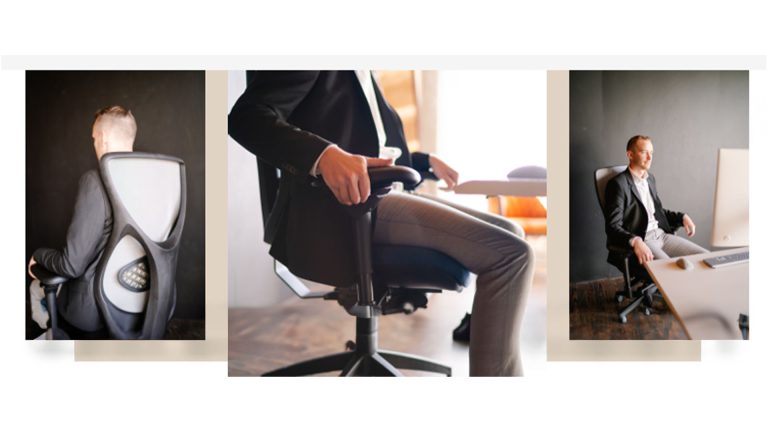
The problem is not adjustability. It is dimensions. A chair that is too small forces a tall employee into a forward perch with no thigh support. A chair that is too large digs into the back of a shorter employee’s knees and prevents the lumbar curve from contacting the backrest. Both employees end up with poor spine alignment by the end of the day. Both end up on a path toward musculoskeletal injury. Neither can adjust their way out of it.
Why One Task Chair Cannot Fit Every Spine – Not Recommended in an Ergonomic Seating Program
Anthropometric data tells us the seated population spans a wide range. Stature, hip width, thigh length, and torso height vary across employees. The popliteal fold (the back of the knee) on a 5’1″ employee sits about three to four inches forward of where it sits on a 6’2″ employee. A single seat pan depth cannot serve both. When the seat pan is too deep, the shorter employee either slides forward and loses lumbar contact, or sits all the way back and has the front edge press into the soft tissue behind the knee. Either way, blood flow restricts and the spine compensates.
When the seat pan is too shallow, the taller employee loses thigh support entirely. The chair becomes a stool. Without thigh support, the pelvis tilts back, the lumbar curve flattens, and the upper spine rounds forward to compensate. This is the posture that drives chronic low back complaints, disc compression, and shoulder impingement. The employee is not sitting incorrectly. The chair is making correct sitting impossible.
A Ergonomic Seating Program That Ignores The Desk Wastes Both Investments
Body fit is the first variable. The desk is the second. A chair program specified in isolation from the desks it sits beneath leaves money and posture on the table. The two have to be specified together, or the company pays for benefits it never receives.
Consider a height-adjustable desk that meets the BIFMA standard and lowers to 21.5 inches. A 5’1″ employee can drop the desk to a height where her elbows sit at 90 degrees, her feet rest flat on the floor, and her spine stacks correctly without a footrest. The same desk needs to rise high enough for a 6’2″ employee to stand with shoulders relaxed and elbows at 90 degrees. The desk does its job in both cases. But only if the chair is specified to match. The shorter employee needs a chair that lowers far enough to keep elbows level with the desk surface at its lowest setting. The taller employee needs a chair with a seat height range that reaches up to the higher seated working height, and the chair has to be configured so the cylinder, seat pan, arm height, and back support all coordinate at that range. A chair specified for the lower end of the range cancels the benefit at the upper end. A chair without proper standing-height pairing forces the employee to keep adjusting all day and eventually stop adjusting at all.
The same logic extends to fixed-height desks at 29 inches with desktop sit-stand adapters perched on top. The adapter changes the working surface height in ways that affect arm position, shoulder loading, and chair height range. A chair selected without knowing the adapter exists usually ends up wrong. Fixed-height 24-inch desks bring keyboard trays into the equation, which changes the seated working height again and changes which chair can serve the employee correctly.
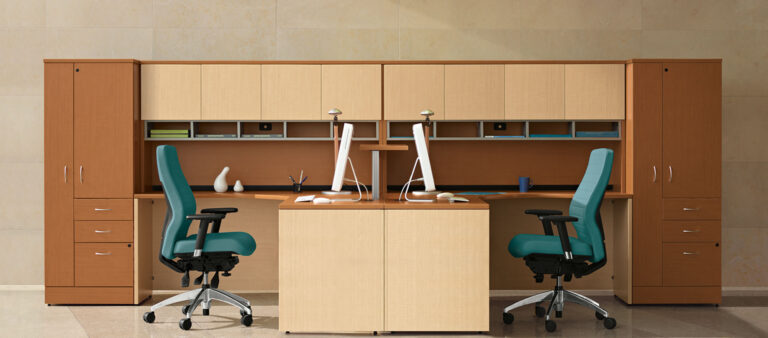
An effective ergonomic seating program looks at the whole workstation. Chair, desk, monitor arm, keyboard tray, and any sit-stand adapters are one system. Specifying any one of them in isolation undermines the others. Pacific Ergonomics builds programs that coordinate all of it, so the height-adjustable desk investment, the keyboard tray investment, and the chair investment all pay off together rather than canceling each other out.
What an Ergonomic Seating Program Actually Solves
A real ergonomic seating program is not a chair purchase. It is a system. It accounts for the range of bodies in the workforce, the tasks those bodies perform, the desks they sit at, and the hours they spend doing the work. It treats seating the way a uniform program treats clothing: not one size, not infinite custom orders, but a structured set of options matched to measured employees and the workstations they use.
A workplace seating standard also has to account for what the workstation is now and what it is going to be. If a company runs static desks today but knows it is moving to height-adjustable next year, the chair program needs to be specified for both states. The wrong sequence is buying chairs for the static desks, then discovering most of them cannot rise to the new desk range eighteen months later. We make this easy. The program is built once, with the future state factored in, so the chairs purchased today still work when the desks change.
A workplace seating standard built on body fit addresses six things:
1. Stature range. The chair line accommodates the 5th percentile female through the 95th percentile male, with multiple seat pan options where one chair cannot span the range.
2. Task and workstation profile. A finance analyst sitting nine hours at a height-adjustable desk needs a different chair than a project manager working at a fixed-height desk with a sit-stand adapter.
3. Future-state planning. The chairs specified today have to work with the desks the company plans to deploy next year, not just the desks already in place.
4. Accommodation pathway. Employees outside the standard range get a documented escalation route, not an HR ticket that disappears.
5. Replenishment logic. When someone leaves and a new hire arrives, the chair is reassessed for fit, not handed down by tenure.
6. Documentation. The program creates a defensible record for EHS, HR, and risk management when comp claims surface.
The Cost Of Getting Body Fit Wrong
Companies that skip body fit pay the same money twice. The first invoice is the original chair purchase. The second invoice arrives in pieces over the next three years. It shows up as accommodation purchases, replacement chairs, ergonomic assessments, lumbar pillows that should never have been needed, and the comp claim from the employee whose lower back finally gave out. The Bureau of Labor Statistics tracks musculoskeletal disorders as one of the largest categories of nonfatal occupational injuries involving days away from work. Seated workers are not exempt.
Companies that skip body fit pay the same money twice. The first invoice is the original chair purchase. The second invoice arrives in pieces over the next three years. It shows up as accommodation purchases, replacement chairs, ergonomic assessments, lumbar pillows that should never have been needed, and the comp claim from the employee whose lower back finally gave out. The Bureau of Labor Statistics tracks overexertion, repetitive motion, and bodily condition cases at over 946,000 in the most recent reporting period, the largest category of nonfatal occupational injuries involving days away from work or job restriction. Seated workers are not exempt.
There is also a quieter cost. Employees who cannot get comfortable in their workspace look elsewhere. The chair becomes a daily reminder that the company optimized for a purchase order, not for the person sitting in it. Recruiting suffers. Hybrid policies get harder to enforce because the office feels worse than home. Retention erodes one back ache at a time.
“The best chair in the catalog is the wrong chair if it does not fit the person sitting in it. Body fit is not a feature. It is the entire point.”
Kirstie Anne Berzanski, Principal and CEO
How To Build A Program That Is Cost-Effective, Beautiful, And Right-Sized
The most expensive seating program is the one built on a single cheap chair bought in bulk and replaced within a year. We see this all the time. Companies hand the seating decision to whoever can negotiate the lowest unit price, and within twelve months half the chairs are being torn out, employees are filing accommodation requests, and the company is buying chairs a second time at full price. The savings on the original purchase are erased, the comp exposure has grown, and morale is worse than when they started.
There is a better way, and it costs less than the buy-twice path. Pacific Ergonomics builds seating programs that combine cost discipline, aesthetic consistency, and proper sizing for the employees who fall outside the average range. A wide range of ergonomic chair options exists across sizes and price points. The right strategy specifies the chairs the workforce actually needs, in the volumes the workforce actually requires, with documented accommodation paths for the employees outside the standard.
About the aesthetic concern. Many buyers worry that a multi-chair program will look mismatched, that the office will lose its visual coherence, that visitors will notice. They will not. The chairs we specify across sizes are coordinated in finish, profile, and family, so the office reads as one design language. The employees who needed a different size are simply more comfortable. No one else can tell.
The result: chairs that do not have to be replaced, employees with proper spine alignment, lower injury risk, higher productivity, and a furniture project that comes in at a real total cost rather than a cheap headline price followed by years of remediation invoices.
What A Workplace Seating Standard Looks Like When It Works
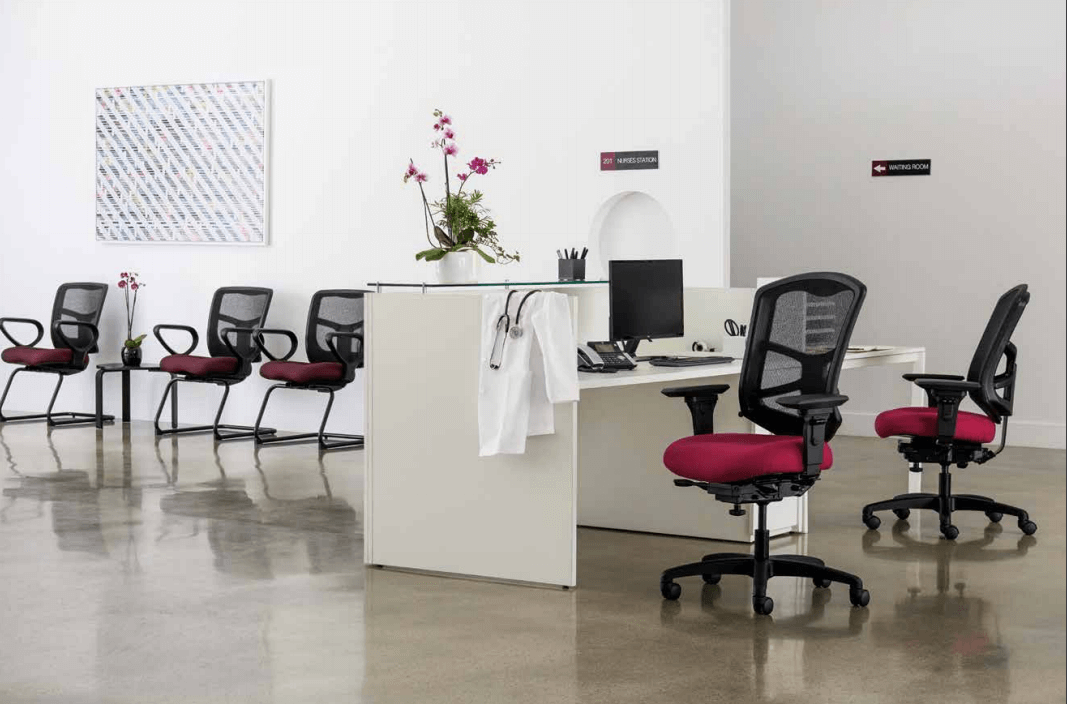
Pacific Ergonomics builds workplace seating standards for companies that have outgrown the one-chair approach. The work begins with the workforce, not the catalog. We assess the stature range, identify the task profiles, document the desks and accessories already in place, factor in the workstation changes the company has planned, and select ergonomic chairs that span the actual bodies in the building and coordinate with both current and future workstations. Where one chair cannot span the range, we build the standard around two or three coordinated models so the office still looks consistent while every spine gets supported.
For companies running national or multi-site programs, we build the standard once and deploy it across locations. EHS gets a defensible spec. HR gets an accommodation pathway. Facilities gets a replenishment process. Finance gets a chair budget that does not have to be reopened every quarter. Employees get chairs that fit.
When To Bring In An Ergonomic Seating Program Specialist
If your company is planning a furniture refresh, opening a new location, consolidating offices, rolling out height-adjustable desks, or responding to a pattern of comp claims, the ergonomic seating program decision happens now, not after the chairs arrive. The cost of bringing in a specialist before the spec is set is a fraction of the cost of replacing chairs that did not fit. Pacific Ergonomics provides ergonomic program development, onsite ergonomic assessment, and Workers’ Comp ergonomic assessments to companies building seating programs from scratch and to companies fixing programs that did not work the first time.
Learn More
Frequently Asked Questions
Build a seating program that fits every body in your workforce.
Pacific Ergonomics is a Certified Woman-Owned Small Business and boutique consultative office furniture dealer based in the Historic District of Escondido. We coordinate chairs, desks, keyboard trays, and accessories into one ergonomic seating program so every investment pays off and every spine gets supported. Schedule a consultation or call 619-546-0872.
329 West Grand Ave, Escondido, CA 92025 | By appointment