Ergonomic Office Furniture Selection: When Aesthetics Fail Anatomy
True ergonomic office furniture selection is not a clinical compromise. It is a measurable strategic asset that drives cognitive performance, talent retention, and risk mitigation across the workforce.
Your workspace is the most tangible signal of your corporate culture. But if your ergonomic office furniture only looks good in a brochure, you are actively sabotaging your bottom line. The C-suite is presented with a false dichotomy: choose the sleek modern office furniture aesthetic that appeals to the Chief Marketing Officer and attracts young talent, or choose the clunky, utilitarian ergonomic options that satisfy the Risk Manager. This binary thinking is outdated, expensive, and avoidable.
The Strategic Argument
Ergonomic office furniture is the sophisticated intersection where high-end design meets human factors engineering. For the CEO and CFO, the furniture in your office is a capital asset that should yield a return in cognitive performance, retention, and risk mitigation. For the CMO, it is a brand asset that communicates innovation. For HR, it is the physical expression of an inclusive workplace. The definition of modern office furniture must shift from visual minimalism to functional maximalism.
In This Article
- What Defines Real Ergonomic Office Furniture
- The Resimercial Trap and the Cognitive Cost of Looking Cool
- The CFO’s Perspective: Liability, Risk, and OPEX
- The CMO’s Perspective: Brand Perception and Talent Attraction
- Design Principles for Ergonomic Office Furniture
- C-Suite FAQ: The Strategic View
- Schedule a Consultation
What Defines Real Ergonomic Office Furniture Selection
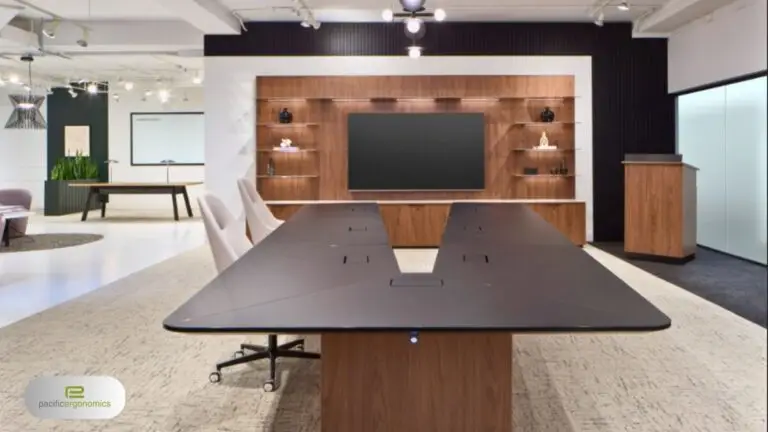
Ergonomic office furniture combines clean design, biomechanical performance, and flexible workstation layouts that support both collaboration and focused work. Organizations investing in ergonomic office furniture are increasingly selecting systems that integrate aesthetics, ergonomics, and adaptable workspace planning into a single specification. The visual language is contemporary. The engineering is rigorous. The two qualities arrive together rather than in tension.
If you are buying office workstations based solely on a look, you are not investing in ergonomic office furniture. You are investing in a museum exhibit, beautiful to look at, but painful to inhabit. The aesthetic alone has no measurable return. The ergonomic engineering alone has no recruiting power. The two have to work together, and that integration is what separates real ergonomic office furniture from furniture that merely looks modern.
At Pacific Ergonomics, the definition of ergonomic office furniture shifts from clinical functionality to functional maximalism. Every piece we specify is evaluated on both axes: how it looks in the room and how it performs over the course of a workday, a quarter, a fiscal year. Many organizations exploring ergonomic office furniture eventually implement these ideas through modern office workstations and modern office cubicle systems designed for both collaboration and ergonomic performance.
Form is Function
The old way of thinking was Form versus Function. The Pacific Ergonomics approach is Form is Function. The aesthetic and the engineering are not in tension. They are the same project. When ergonomic office furniture is genuinely well-designed, it looks better and works better simultaneously, because both qualities derive from the same underlying rigor about what the workspace is for and who it serves.
The Resimercial Trap and the Cognitive Cost of Looking Cool
There is a prevailing trend in office design to make workplaces feel like living rooms, called the resimercial movement. While the intention to reduce anxiety and promote comfort is noble, the execution is often a physiological disaster.
Many executives approve designs featuring low, lounge-style seating and fixed-height communal tables because they look collaborative and cutting-edge. However, asking a software engineer or a financial analyst to perform high-focus cognitive tasks from a lounge sofa is biomechanically inappropriate for the work being asked of the body. This is not ergonomic office furniture. It is residential furniture placed in a commercial setting.
“We don’t want your office to look like a hospital. We want it to look like a gallery but perform like a cockpit.”
The Cognitive Cost
When the body is unsupported, the brain must divert energy to maintain posture. This is a concept known as postural loading. If your ergonomic office furniture lacks lumbar tracking or proper pelvic support (or if your modern office furniture provides neither), the user’s paraspinal muscles must fire continuously to keep the spine upright. The body works harder all day to do what well-designed ergonomic office furniture would do passively.
The business impact is measurable. This low-grade physical stress creates background noise in the nervous system. By 2:00 PM, your team isn’t just physically tired. They are suffering from cognitive fatigue. Decision-making slows. Error rates rise. Creative problem-solving stalls. The cost shows up not as a single visible failure but as a slow daily drag on the work being done across the entire workforce.
Real ergonomic office furniture solves this by hiding advanced biomechanical support inside a sleek chassis. The aesthetic does not have to be sacrificed. The engineering simply has to be present underneath it.
The CFO’s Perspective: Liability, Risk, and OPEX
Let us speak plainly about the financial risks hidden in generic office design. The most expensive component of your office isn’t the real estate or the furniture. It is the human capital sitting inside it.
If you equip your workforce with standard, non-adjustable desks, often sold under the guise of clean lines or uniform modernity, you are making a statistical error that will hit your operational expenditure. This is the difference between buying office furniture and buying ergonomic office furniture: one is an expense, the other is a strategic investment with measurable return.
The Average Employee Does Not Exist
Standard fixed-height desks are typically designed for a male of average height from the 1950s, roughly 5 feet 10 inches. In a diverse modern workforce, this height creates ergonomic hazards for the majority of employees who fall outside that narrow range. Real ergonomic office furniture accommodates the workforce variation rather than requiring the workforce to adapt.
For a 5 foot 4 inch female executive, a standard desk forces her to shrug her shoulders to reach the keyboard, compressing the cervical spine. Over six months, this leads to repetitive strain injuries, carpal tunnel syndrome, and chronic migraines. For a 6 foot 3 inch male engineer, the same desk forces a downward hunch that compresses the lumbar spine and creates lower back strain.
The Hidden Cost
Wrong-fit office furniture results in rising healthcare premiums, workers’ compensation claims, and the hidden cost of presenteeism: employees physically present but functionally diminished due to chronic discomfort. Most CFOs never connect these costs back to the original procurement decision because the symptoms surface years after the furniture was installed. Real ergonomic office furniture prevents this category of cost entirely.
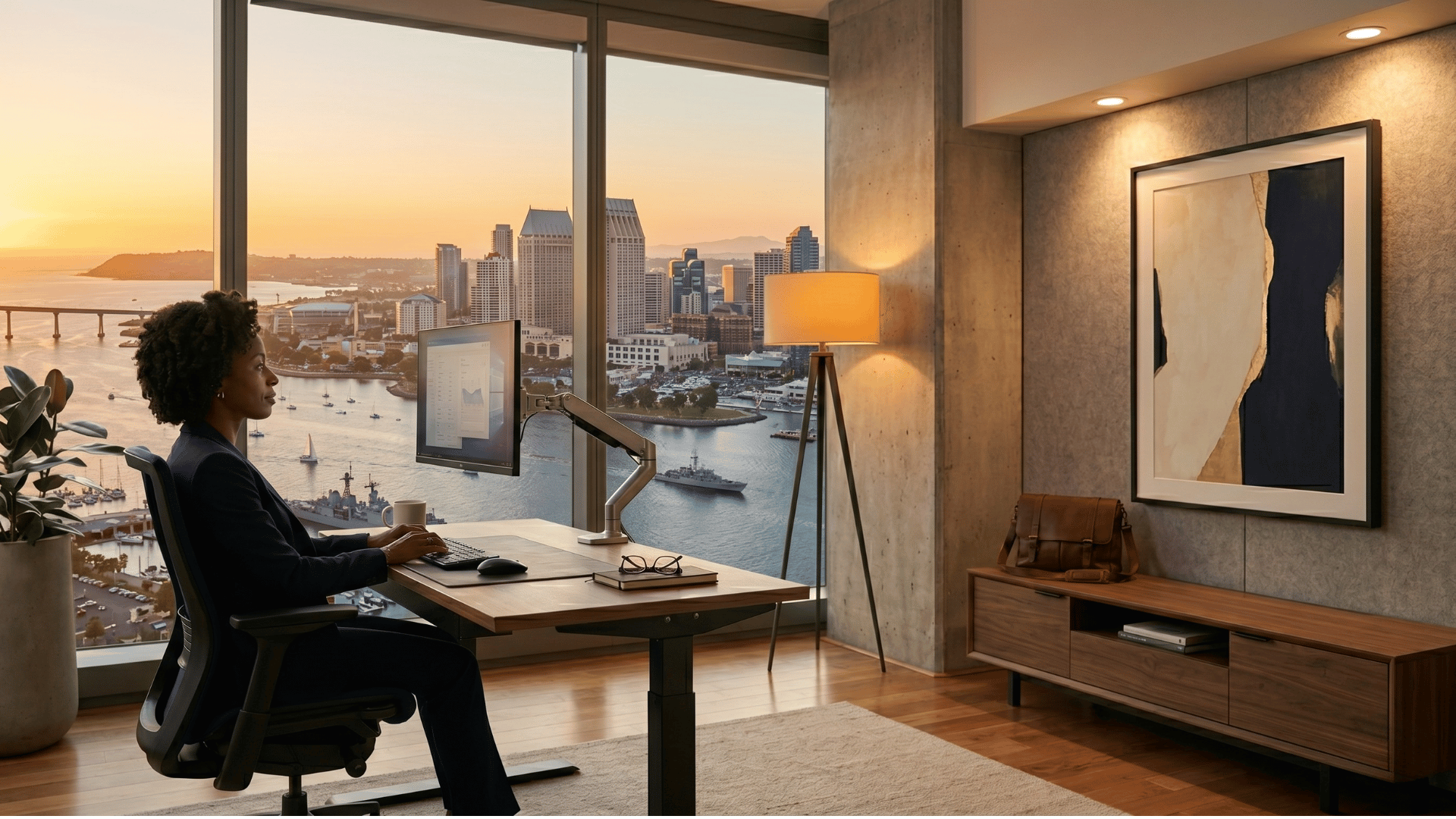
Investing in ergonomic office furniture that includes precision-adjustable height capabilities and articulating monitor arms is not a perk. It is a risk mitigation strategy. The principle is straightforward: the environment must adapt to the human, not the other way around. Ergonomic office furniture pays back through avoided injury cost, retained productivity, and the absence of accommodation requests that compound over time.
The CMO’s Perspective: Brand Perception and Talent Attraction of Ergonomic Office Furniture
The Chief Marketing Officer knows that the workspace is a three-dimensional billboard for the company brand. When high-value clients visit, or when you are courting a top-tier candidate from a competitor, the office speaks before you do. Ergonomic office furniture, done well, says everything about how the company values the people who work there.
Top talent is discerning. They have worked in cool offices that hurt their backs. They know the difference between cheap modern office furniture that mimics premium materials and quality engineering that supports the people doing the work. The aesthetic alone no longer impresses sophisticated candidates. They are looking for substance underneath the style.
The Wow Factor With Substance
A truly modern workspace impresses not just through color palettes, but through obvious investment in employee well-being. When a candidate sees a workspace outfitted with high-performance ergonomic office furniture and intuitive sit-stand solutions, the subtext is clear: this company values long-term employee health and performance, not just first impressions.
For clients, the same dynamic applies. A chaotic, uncomfortable office suggests a disorganized company. A streamlined, ergonomically optimized environment projects efficiency, precision, and stability. The conference room where the deal gets signed says something about the company before any contract is reviewed. Real ergonomic office furniture delivers both the visual confidence and the underlying performance that sophisticated buyers and candidates recognize.
“Ergonomic office furniture must achieve the aesthetic wow factor without compromising the how factor. Both qualities derive from the same rigor about what the workspace is actually for.”
Design Principles for Ergonomic Office Furniture
Consider the open-plan office. The modern trend was to tear down walls to encourage collaboration. The result was often a cacophony of noise that destroyed the focus the workforce needed to do its actual work. The aesthetic intent (openness) and the operational outcome (chaos) were in direct conflict. Real ergonomic office furniture has to solve for both.
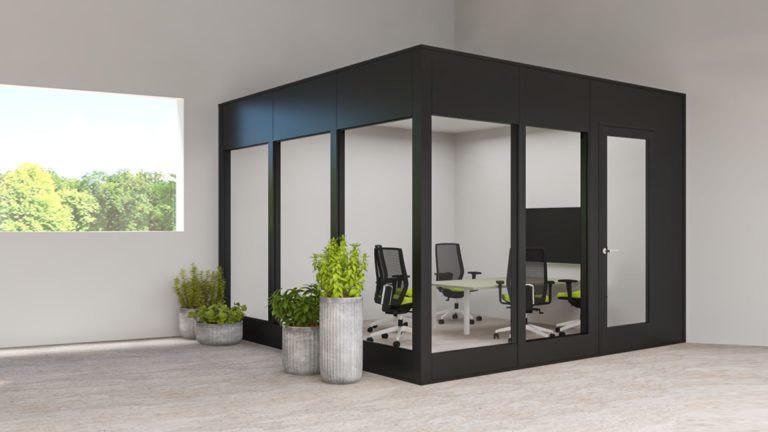
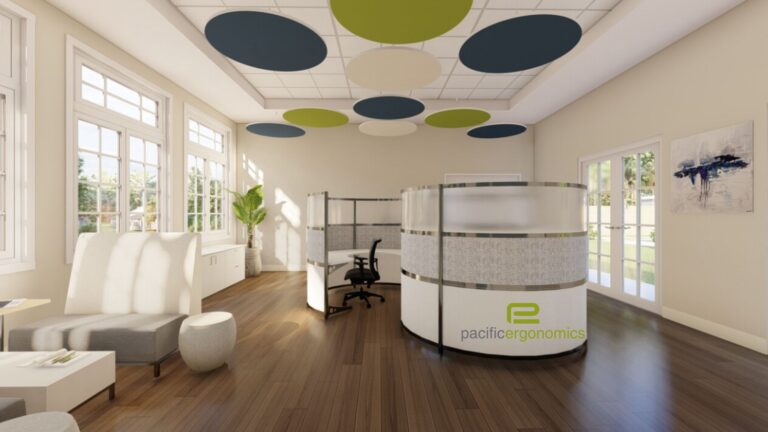
The Pacific Ergonomics approach uses modern office cubicles and acoustic engineering elements that dampen sound without sacrificing visual openness. Glass stackers and acoustic fabric tiles function as architectural elements but perform as noise-cancellation devices. Data and power access integrate seamlessly into furniture surfaces, eliminating the visual clutter of cords (an aesthetic win) while ensuring employees can connect and work instantly without crawling under desks (a productivity win). Form is function, executed deliberately.
Furniture as Strategic Asset
Your office furniture is a tool, not a decoration. As a C-suite leader, you demand high performance from your software, your logistics, and your people. Demand the same from your physical environment. Don’t settle for modern office furniture that is merely a style. Demand ergonomic office furniture that is a result, a strategic asset that drives productivity, protects your people, and elevates your brand.
C-Suite FAQ: The Strategic View
CFO: Can we quantify the ROI of ergonomic office furniture?
Yes. The return on ergonomic office furniture is calculated through three measurable categories: real estate efficiency (doing more with less footprint through better workstation design), risk reduction (lower workers’ compensation claims and absenteeism), and productivity lift. Studies have shown that proper ergonomic intervention can increase productivity meaningfully by removing the micro-breaks caused by physical discomfort. The math gets more compelling at scale, where small per-employee gains aggregate into significant operational improvements.
CMO: Can we have ergonomic office furniture that doesn’t look clinical?
Yes, and this is the core differentiator of ergonomic office furniture done well. Pacific Ergonomics works with manufacturers who prioritize hidden ergonomics: chairs and desks wrapped in premium textiles, leathers, and finishes that match your brand palette while concealing advanced biomechanical engineering inside the chassis. The office can look like a design showroom while performing like a research laboratory. The aesthetic and the engineering are not in tension.
CEO: How does ergonomic office furniture impact our return-to-office strategy?
Employees will not commute to an office that is less comfortable than their home setup. To win the return-to-office battle, your office must offer an experience that the home cannot: superior ergonomic support, seamless collaboration zones, and a professional aesthetic that induces a work mindset. Ergonomic office furniture is the cornerstone of a successful return-to-office policy, because it makes the in-person environment genuinely worth the commute.
HR Director: How does ergonomic office furniture selection affect our diversity, equity, and inclusion goals?
Inclusive design is ergonomic design. A one-size-fits-all approach excludes employees with different physical abilities, heights, body types, and needs. Providing adjustable, adaptable ergonomic office furniture signals that your company is physically inclusive of every member of the workforce, moving DEI commitments from policy statements to physical practice. Every employee fits the workspace because the workspace is designed to fit every employee.
What is the difference between ergonomic office furniture and modern office furniture?
The terms are often used as if they describe different categories, but in well-designed workspaces they describe the same furniture seen from different angles. Modern office furniture refers to the visual and functional language of contemporary workplace design: clean lines, integrated technology, flexible configurations. Ergonomic office furniture refers to the biomechanical engineering that supports the human body through long workdays. The best ergonomic office furniture is also the best modern office furniture, because both qualities derive from the same rigor.