Shared Offices Versus Private Offices
As companies navigate the evolving landscape of workplace design, the debate between shared offices versus private offices has taken center stage. In an era of hybrid work models and spatial consolidation, determining who should occupy a private office versus a shared office can significantly impact employee productivity and satisfaction. Here’s a comprehensive guide to help you make informed decisions.
1. Determine Feasibility with Strategic Planning
The first step in choosing between a shared offices versus private office is to assess what is functionally possible within your organization. While consolidating employees into shared offices may sound efficient on paper, it might not always translate into practical or productive outcomes. An effective shared office design should foster a harmonious work environment, promoting both productivity and employee happiness.
2. Strategic Employee Pairing for Shared Offices
Not every employee combination is ideal for shared office furniture. Identifying who should share a space requires strategic planning:
– Employees with completely different work hours make great candidates for shared offices.
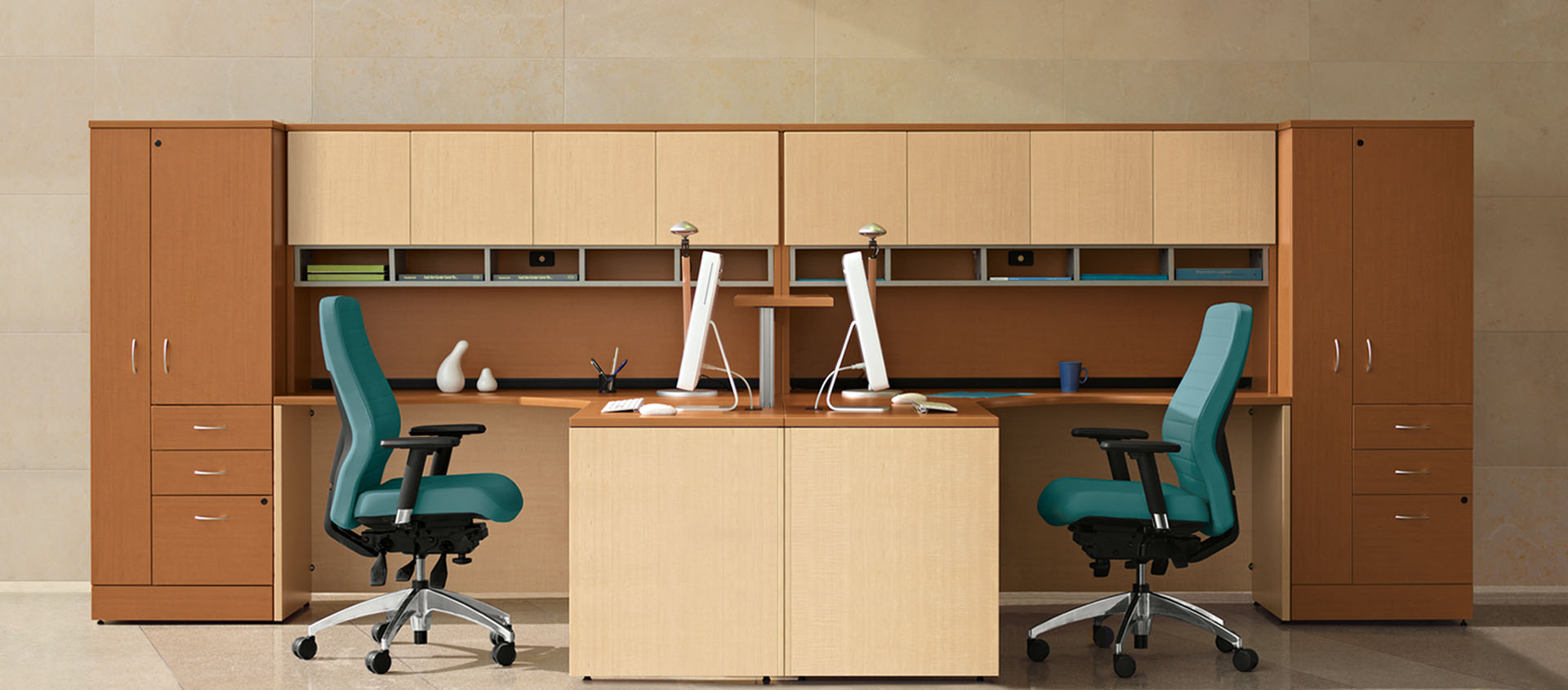
– Individuals who collaborate frequently can benefit from a two person desk facing each other design, instead of constantly moving to conference rooms.
– Those who primarily engage in computer work with minimal phone or video calls are also good candidates
– Employees who regularly greet guests can enjoy an office desk for 2 people design
– Employees working different schedules, such as alternating between home and office, can effectively share an office space.
-Conversely, employees such as salespeople or executives who are frequently on calls might not be suited for shared office environments.
3. Consider the Politics of a Shared Office Versus a Private Office
Navigating the shift from a private office to a shared workspace can be a delicate process, one that requires thoughtful consideration of employee sentiments and perceptions. When employees who are accustomed to the privacy and autonomy of a personal office are suddenly required to share their space, it’s not uncommon for them to feel as though they’ve been demoted.
To mitigate this, it’s essential to approach the transition with transparency and empathy.
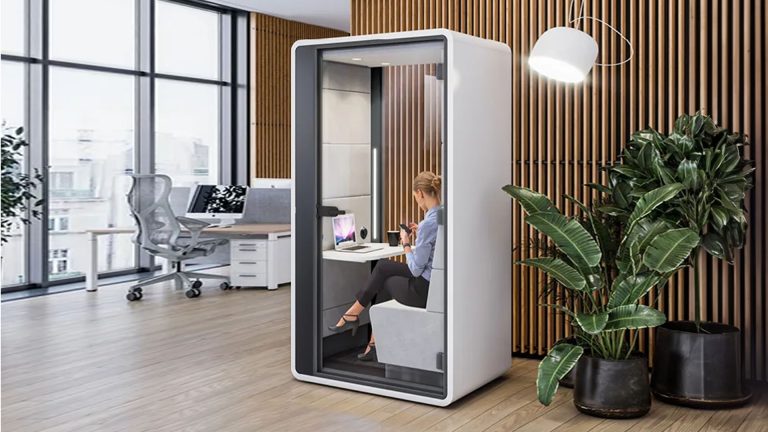
Clearly communicate the rationale behind the change, emphasizing the benefits of collaborative environments, such as increased creativity and stronger team dynamics. Providing opportunities for employees to voice their concerns and offering solutions to maintain personal workspace boundaries can also ease the transition. By focusing on creating a culture that values openness and mutual respect, companies can transform what might initially seem like a step back into an opportunity for growth and innovation. Incorporate acoustic pods for employees to use when they need to make personal calls. This new and intriguing feature can be very helpful.
4. Addressing Functional Requirements When Deciding on Shared Office Versus Private Office
Ensuring a comfortable and safe workspace is crucial. Our commercial space planner and designer will help create a shared office design that adheres to essential design principles. For instance, maintain at least a 36-inch walkway for safe and comfortable access. Also, consider door clearance to avoid space constraints. Sometimes after space planning the decision is clear of what is possible to do with shared offices versus private office.
5. Designing for Comfort such as Preventing Sun Glare
To avoid issues like Computer Vision Syndrome (CVS) and Musculoskeletal Disorders (MSDs), ensure desks are positioned to prevent glare from windows. Glare can cause eye strain, headaches, and discomfort, prompting employees to adopt awkward postures. When deciding on shared offices versus private offices, sometimes one or more employees end up having to work in an awkward fashion to support the plan. This isn’t recommended big picture.
6. Develop an Acoustic Strategy When Considering Shared Office Versus Private Offices
When two employees share an office, managing sound is particularly crucial. Consider frosted desk screens or sound-absorbing partitions to reduce noise while maintaining a bright and open feel. However, remember that these solutions mute but do not completely eliminate sound. Therefore, for areas that will be noisy, ensure that there are office telephone booth facilities available nearby to take important calls.
7. Avoid Unfavorable Desk Arrangements
Avoid positioning desks back-to-back or face-to-face without dividers, unless it was designed intentionally for their collaboration needs. Sometimes it can be very strategic and useful. If done without thought and intention, can lead to conflicts and acoustic challenges. Adjust desks to avoid these arrangements and create a more harmonious workspace. If this can’t be done, the decision of shared offices versus private offices may be clear.
Shared Offices versus Private Offices Summary
When determining whether to place employees in shared offices or private offices, a company must weigh several key factors that align with its organizational goals, culture, and operational needs. The decision is a balancing act that considers productivity, collaboration, and employee well-being. Shared offices can foster collaboration, spark creativity, and enable a more dynamic exchange of ideas, which can be particularly beneficial in environments that thrive on innovation and teamwork. However, they can also present challenges such as noise and lack of privacy, which might impede tasks that require deep concentration or confidentiality.
Conversely, private offices offer seclusion, allowing employees to focus without distractions and handle sensitive information securely. They can cater to roles that require significant individual work or involve confidential client interactions. Yet, they might inadvertently create silos, reducing the frequency of spontaneous interactions that can lead to new ideas and solutions. Ultimately, the choice depends on the nature of the work, the preferences of the employees, and the overarching strategy of the company. By carefully assessing these factors, companies can create a workplace environment that enhances productivity and satisfaction, aligning physical space with strategic objectives and employee needs.