U-Shaped Conference Tables
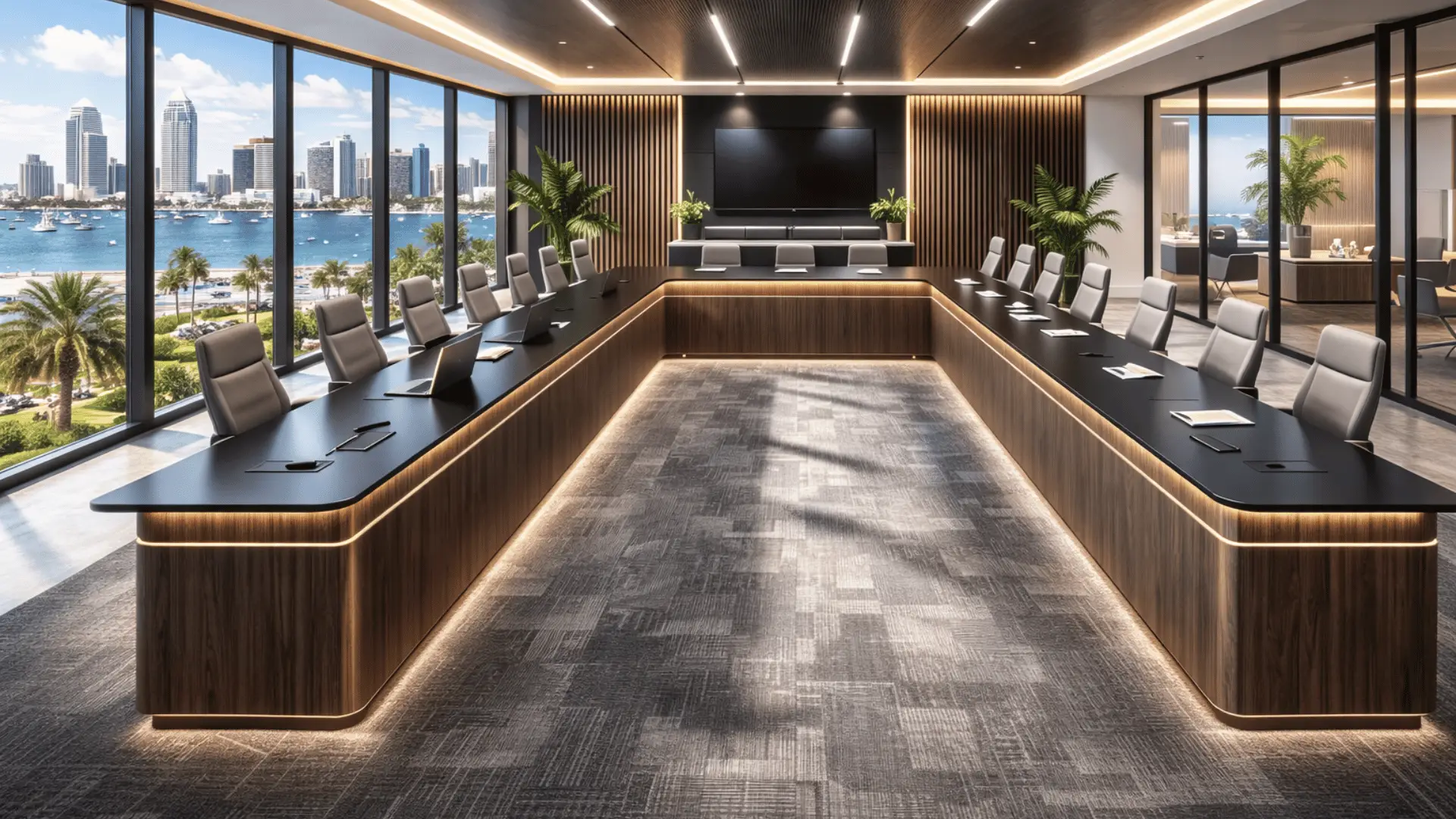
U-shaped conference tables offer a myriad benefits for collaboration, ergonomics, and even feng shui—making it a powerful choice for organizations that want meetings to be both productive and engaging. At Pacific Ergonomics, we design and source U-shaped conference tables that combine function, comfort, and aesthetics for modern meeting spaces.
Description
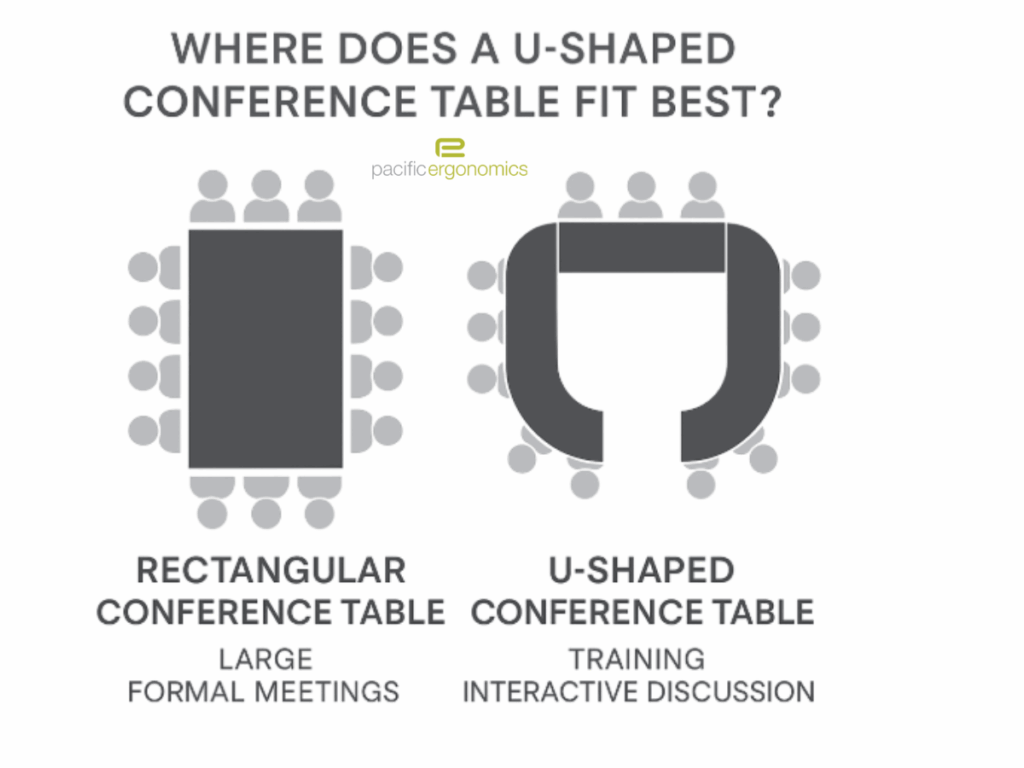
Benefits of a U-Shaped Conference Table
1. Function & Sightlines
U-shape conference tables facilitate clear sightlines and efficient communication, allowing participants to easily see and interact with one another. This open configuration encourages discussion, decision-making, and team engagement. The central open space also provides a natural area for presentations, audiovisual equipment, or training leaders, ensuring everyone remains connected to the focus point of the meeting.
2. Ergonomic Comfort for U-Shaped Conference Tables
From an ergonomic standpoint, U-shaped conference tables provide ample legroom and comfortable seating arrangements, reducing strain during longer meetings. The shape encourages natural engagement and makes it easier for everyone to face the speaker or screen. This inclusive arrangement promotes focus, reduces fatigue, and supports long-term well-being.
3. Feng Shui & Atmosphere of U-Shaped Conference Tables
According to feng shui principles, the U-shape conference table promotes balance, openness, and flow of positive energy. The open end of the U allows chi to circulate freely, while the curved design fosters a sense of unity and shared purpose among participants. The result is a meeting environment that feels welcoming, energetic, and conducive to creativity.
Where Do a U-Shaped Conference Tables Fit Best?
A U-shaped conference table is ideal for:
-
Training Rooms & Classrooms → The open center gives instructors space to walk, engage participants, and integrate technology or visual aids.
-
Executive Boardrooms → Creates a focal point for leadership, with everyone positioned to see both the speaker and each other.
-
Hybrid Meeting Spaces → Works seamlessly with video conferencing setups, since all participants face the open end where monitors or cameras are placed.
-
Large Group Discussions → Encourages equal participation by keeping everyone in view, unlike long rectangular setups where some participants are far removed.
Common Room Sizes for U-Shaped Conference Tables
-
Medium Training Room (18’ x 20’) → Fits a smaller U-shape seating 12–14 people comfortably.
-
Large Boardroom (20’ x 24’) → Works well for a U-shape that seats 16–20 people.
-
Extra-Large Collaboration Room (25’ x 30’) → Accommodates larger configurations for 24+ participants, often modular so segments can be moved.
Rule of thumb: You’ll want 3–4 feet of clearance around the outside perimeter of the U for walkways and ADA compliance.
Pair Your U-Shaped Table with Matching Furniture
-
Conference Room Chairs designed for the table ensures participants remain comfortable and engaged. Also depending on how many people need to sit there, our team can recommend the correct chair size and style.
-
Executive Office and Conference Room Credenzas: Provide matching storage for AV equipment, files, or refreshments.
-
Technology Integration: Add power, data ports, or cable management for seamless hybrid meetings.
Frequently Asked Questions
What room size do I need for a U-shaped conference table?
Most U-shaped tables fit best in rooms that are at least 18’ x 20’. For 16–20 participants, a 20’ x 24’ boardroom is common, while extra-large rooms (25’ x 30’ or larger) can seat 24+ participants. Always allow at least 3–4 feet of clearance around the perimeter for walkways and accessibility.
Can the side depths of a U-shaped conference table be different?
Yes. The most common layout is 36" depth on each side wing and a slightly deeper 42–48" base. This balances ergonomics, technology integration, and clear sightlines.
How many people can fit around a U-shaped conference table?
A typical U-shape seats 12–24 people depending on dimensions. Smaller versions (12–14 seats) work well for training rooms, while larger executive setups may seat 20–30.
Is a U-shaped table better than a rectangular table for video conferencing?
Yes. Because participants all face the open end of the U, cameras and screens can be placed at the focal point, keeping remote participants clearly visible and engaged.
Can a U-shaped table be modular or reconfigurable?
Absolutely. Many U-shaped tables are built in sections that can be reconfigured into other shapes (rectangle, closed square, or separated training tables) for maximum flexibility.
What finishes are available for U-shaped conference tables?
You can choose from laminate, veneer, glass, or custom materials. Popular options include modern two-tone laminates, natural wood veneer, and tech-integrated finishes with power and data ports.
How do I choose the right size U-shaped table for my room?
The best approach is to start with your room dimensions and seating needs. Our team provides space planning to ensure the table fits the room while leaving clear walkways and ADA-compliant spacing.
Do U-shaped tables work in smaller rooms?
They can, but in smaller rooms (under 15’ x 18’), a boat-shaped or oval table may provide better space efficiency. U-shapes are most impactful when you need presentation space in the center.