25 Years of Expertise Serving Nationwide | Showroom by Appt Only: Escondido, CA · Mon–Fri 8:30am–5pm PST |

25 Years of Expertise Serving Nationwide | Showroom by Appt Only: Escondido, CA · Mon–Fri 8:30am–5pm PST |
Acoustic panels solve a specific problem: too much noise bouncing around an open office, without needing to wall the whole space off. Pacific Ergonomics specifies acoustic panels, dividers, and sound-absorbing furniture based in San Diego and installed nationwide, and we’ve found the biggest mistake most companies make is assuming every wall and surface needs treatment. Usually it doesn’t. The right placement of the right panels solves most noise problems without overwhelming the room’s design.
Conference rooms and private offices are the two spaces that benefit most from acoustic treatment, and they’re the two spaces most companies overlook. These are exactly the rooms where clear conversation matters most, and where a single hard surface can turn a normal meeting into one where people keep asking each other to repeat themselves.
Acoustic panels mount on walls or ceilings to absorb sound. They come in a range of materials, colors, and finishes, so the acoustic fix doesn’t have to look like a fix, it can match the rest of your office design instead of standing out from it.
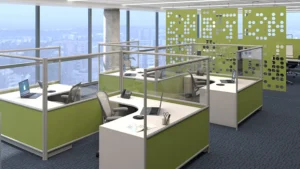
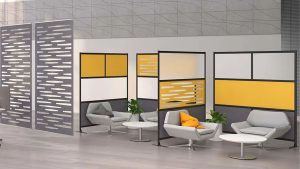
Dividers and screens create private zones inside an open-plan office, cutting down on the noise that travels between workstations. They also give you a way to define separate areas without committing to permanent walls.
Ceiling tiles absorb excess noise from above, and integrate into most existing ceiling systems without a major renovation. This is often the least visible acoustic fix available, since it works overhead rather than at eye level.
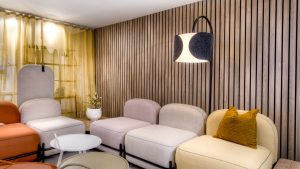
Chairs, sofas, and tables built with sound-dampening materials add acoustic value without looking like acoustic equipment. This is a good option when a space needs noise control but can’t take on more wall-mounted panels or dividers.
Acoustic panels can double as art, reducing echo and noise while adding something worth looking at instead of a visibly technical install. The right piece balances the room’s acoustic needs with its actual design, so it reads as decor first and function second.
Floor coverings with sound-absorbing properties cut down on noise from foot traffic, an easy addition to an acoustic plan that’s often skipped because it doesn’t look like an acoustic product.
More panels doesn’t mean more sound control. The most common mistake is assuming full wall or ceiling coverage is necessary. Strategic placement, based on where sound actually bounces and travels in a specific room, usually solves the problem with far less material and far less disruption to the space’s design. That’s the assessment we walk through before recommending anything.
No. Full coverage is rarely necessary. Strategic placement based on how sound moves through a specific room usually solves the problem with fewer panels, not more.
Acoustic panels mount on walls or ceilings to absorb sound in a room. Dividers create separate zones within an open office, cutting down on noise that travels between workstations while also defining space.
Yes. Acoustic panels are available in a range of materials, colors, and finishes, including options designed to double as wall art, so the acoustic fix doesn’t have to look like one.
Conference rooms and private offices typically benefit the most, since clear conversation matters most in these spaces and they’re often the most overlooked when acoustic treatment is being planned.
Before you request a single quote, let us understand the business you are furnishing. A short discovery conversation tells us more than any spec sheet, and it is where every Pacific Ergonomics project begins.
"*" indicates required fields