

Bay ESD Chair- Wide Seat
The Bay ESD Chair Ideal for Larger Frames
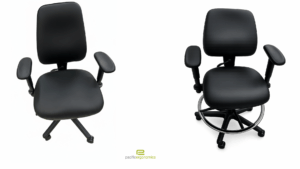
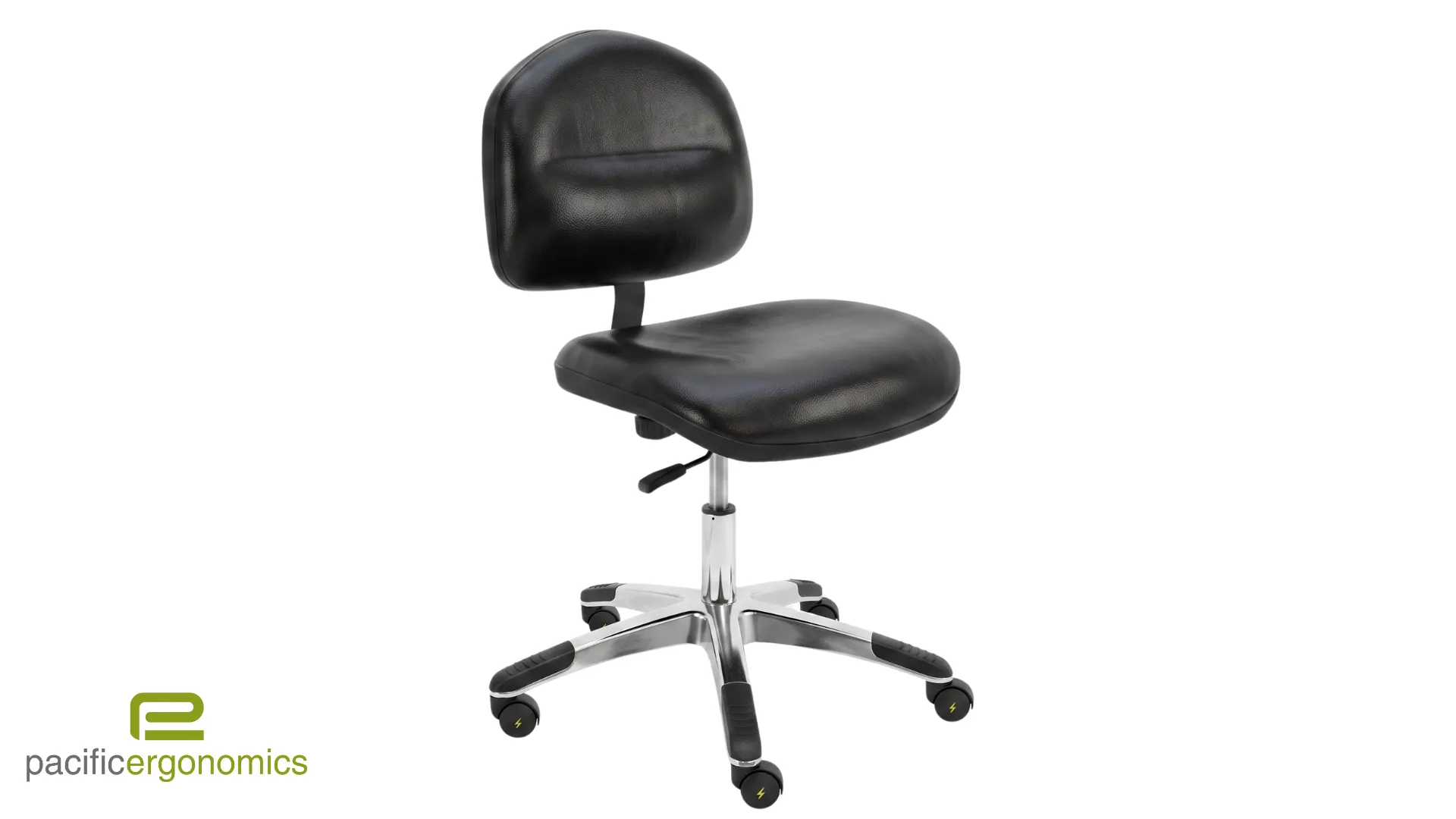
An ESD chair has one job before comfort enters the conversation. It gives the seated operator a continuous, measurable path to ground. Pacific Ergonomics has configured ESD seating for electronics manufacturers, defense contractors, and semiconductor labs nationwide for more than 25 years, and the Bay is the chair we recommend when the operator needs room: a 21.5″ wide, 19″ deep seat and a 450lb rating that fit broader builds and taller frames through a full shift.
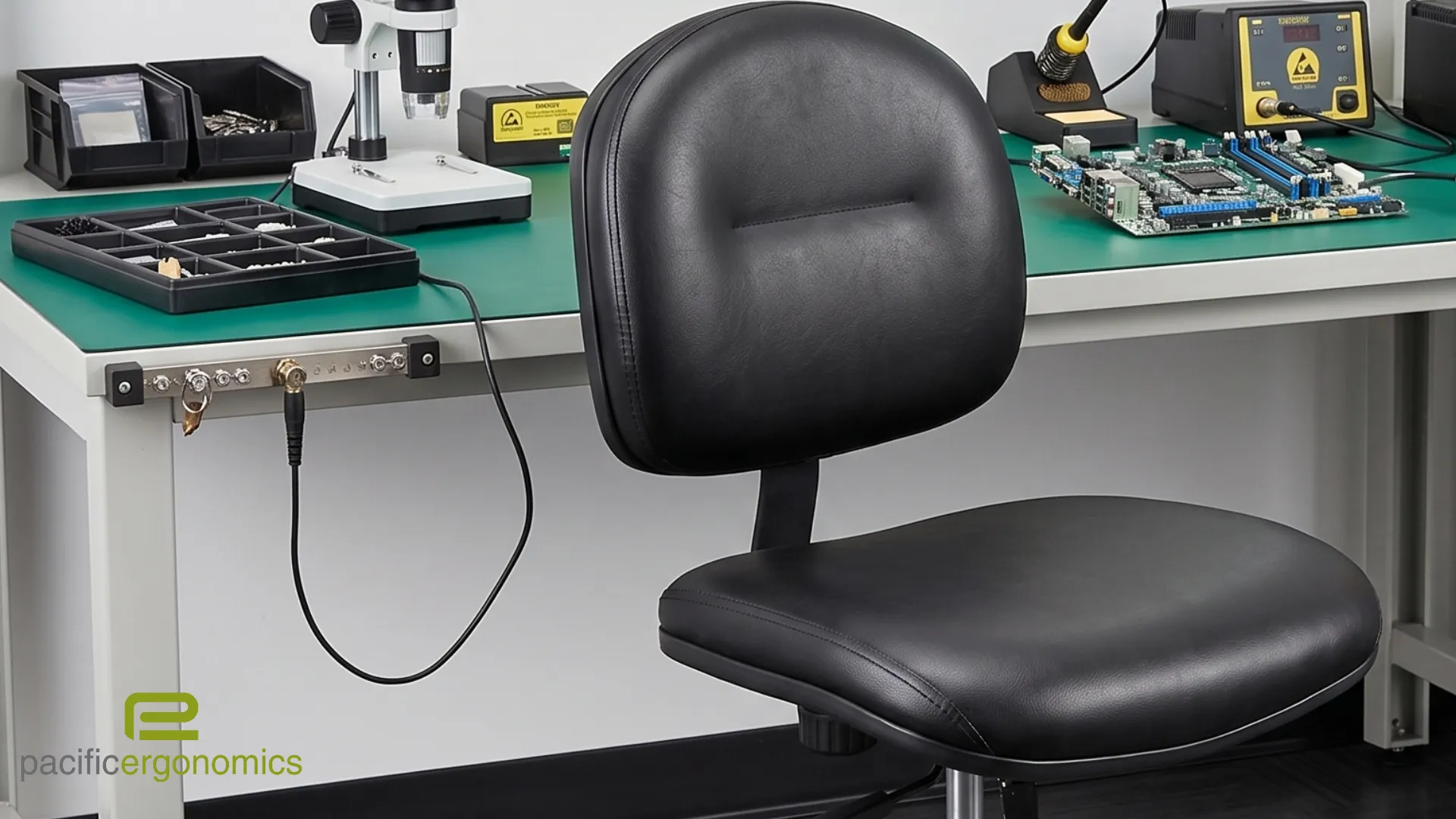
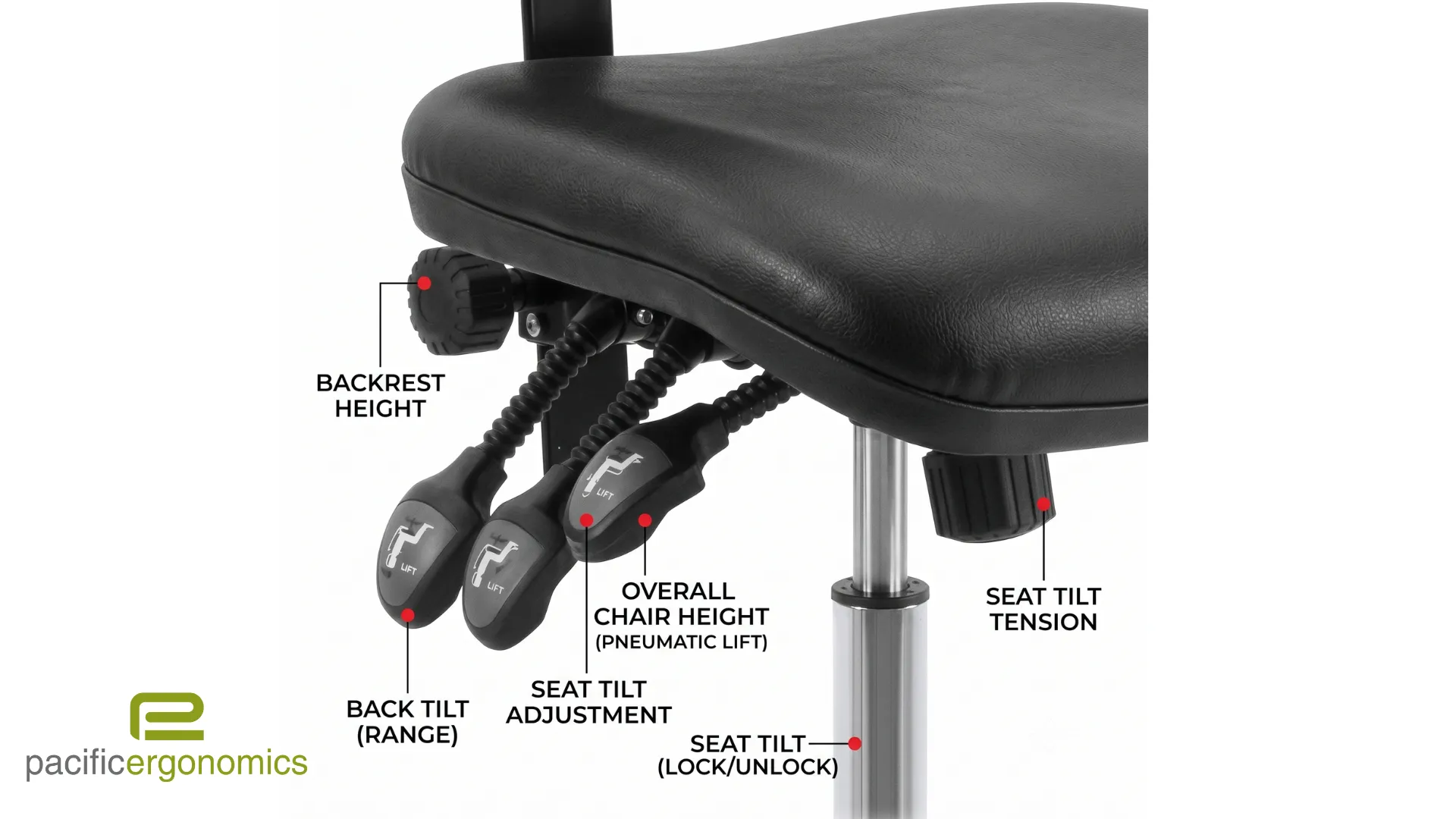
The Bay grounds through its seating surface, aluminum base, and conductive casters, with no drag chain. Independent testing to ANSI/ESD STM12.1-2019 measured 1.2 to 7.8 million ohms at every test point, well inside the 1 billion ohm limit for seating in ESD control programs built to ANSI/ESD S20.20. Three levers control seat height, seat tilt, and back tilt tension across an 18″ to 23″ range, so one chair spec fits a mixed team at desk-height benches.
We confirm the cylinder, casters, and seat configuration against your bench height, flooring, and ESD program before anything ships, and the Bay carries a 10 year warranty. Smaller-framed operators should look at the Cove Petite ESD Chair, the compact sibling with a shorter seat pan and lower height range.
Description
Benefits of the Bay Wide Seat ESD Chair
The ESD Wide Seat Chair is Built for Room and Reach
Most static-control seating is cut narrow. The Bay’s 21.5″ wide, 19″ deep seat gives broader builds and taller torsos real support instead of a perch, and the waterfall front keeps pressure off the back of the thighs through long solder and inspection sessions. The 450lb rating means one chair spec covers nearly your whole team.
A Wide Aluminum Base That Works as a Footrest
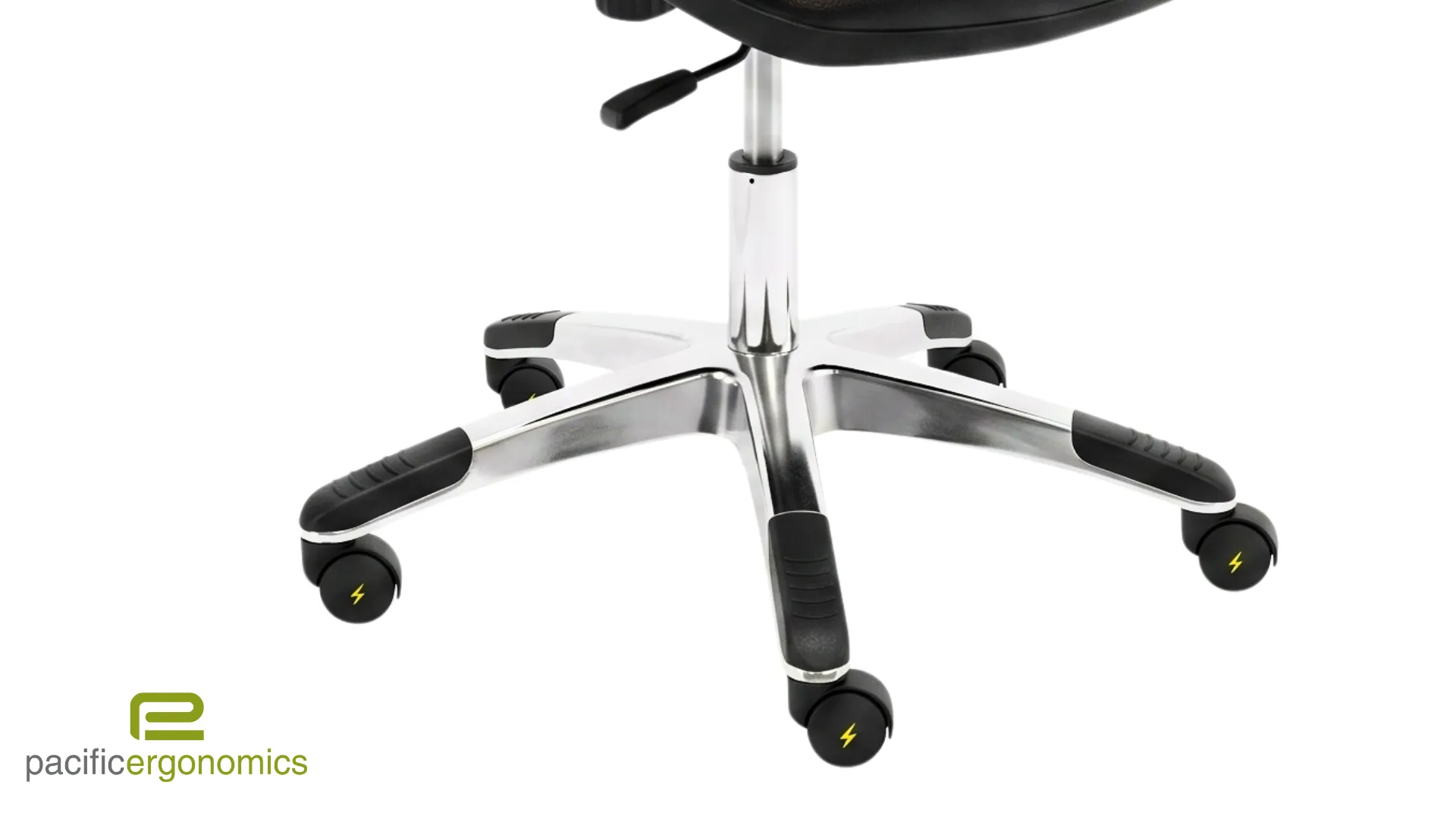
The polished aluminum 5-leg base is heavier and broader than a standard base, so the chair stays planted as operators lean into detail work at the top of the height range. The wide, flat leg profile gives feet a solid place to land when the seat is raised, so shorter operators keep supported posture instead of dangling. It also carries the conductive ESD casters that complete the ground path, which the standard base does not.
Grounded Through the Casters, No Drag Chain
The Bay grounds through five conductive caster contact points that stay on the floor while the chair moves. Measured resistance runs 1.2 to 7.8 million ohms at the backrest, seat, and frame, well inside the 1 billion ohm limit, so there is no chain to snag on flooring, catch debris, or lose contact mid-shift.
Four Foam Densities Under One Operator
The 3″ cushion stacks four foam densities, from a memory foam top layer down to extra-firm support foam, so it fits lighter and heavier operators on the same production line without bottoming out. The static-dissipative upholstery wipes clean and carries an anti-microbial treatment for shared, multi-operator stations.
Optional ESD Arms That Stay in the Ground Path
Adjustable ESD arms are available with 2.5″ of height adjustment, so each operator sets forearm support at their own bench height instead of working around fixed arms. The pads are molded self-skinning urethane, dissipative at 108 ohms, so adding arms keeps every contact surface inside the safe dissipative range. The closed urethane surface has nothing to absorb flux, oils, or grime, and wipes clean with standard bench cleaners.
For Shorter Employees, See the Cove
If part of your team is shorter or smaller-framed, look at the Cove ESD Petite Chair. It looks nearly identical to the Bay and grounds the same way, with a smaller seat pan and a lower seat height starting at 16″ so smaller operators get the same correct fit. Most facilities order both across a line.
Use Cases
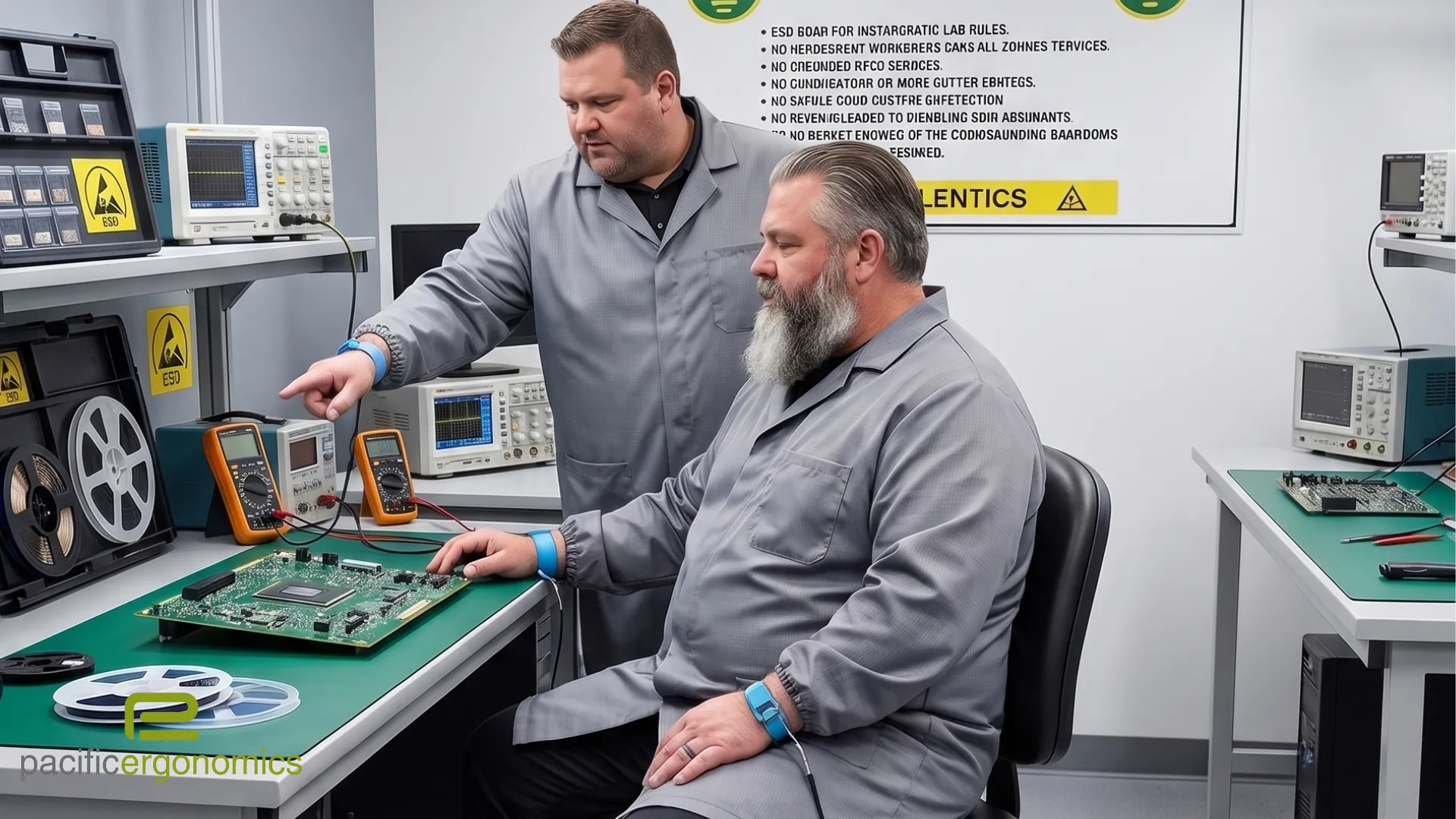
- Electronics assembly and solder benches where operators share stations across shifts
- Defense and aerospace production floors running an ANSI/ESD S20.20 program
- Semiconductor test and repair labs at desk-height work surfaces
Frequently Asked Questions
Does the Aluminum Base Matter for ESD, or Is It Cosmetic?
It matters. The aluminum base is part of the conductive path from the seating surface to the floor, and it carries the ESD casters that complete grounding without a drag chain. Independent testing to ANSI/ESD STM12.1-2019 confirms the metal base configuration measures within the safe dissipative range at every test point. The standard base does not take ESD casters and needs a drag chain instead.
Can Operators Rest Their Feet on the Base?
Yes. The aluminum base's wide, flat legs are built to take feet, and at the upper end of the 23″ seat height they act as a footrest for operators whose feet no longer reach the floor. That keeps thighs supported and circulation moving without adding a separate foot ring or floor-standing footrest at the bench.
What Bench Heights Does the Bay Pair With?
The 18″ to 23″ range covers desk-height benches and work surfaces. For counter-height and standing-height benches, Pacific Ergonomics carries taller ESD seating with foot rings and will spec the right cylinder for your bench before you order.
Specs
| Specification | Detail |
|---|---|
| Seat | 21.5″ wide × 19″ deep, waterfall front |
| Back | 15.5″ high with contoured lumbar support |
| Seat Height Range | 18″ to 23″, pneumatic |
| Controls | Three-lever stainless steel controls: seat height, seat tilt, and back tilt tension, plus knobs for backrest height and seat tilt tension |
| Cushion | 3″ quadruple-density foam with a memory foam top layer |
| Upholstery | 32 oz static-dissipative upholstery with anti-microbial treatment |
| Base | Polished aluminum 5-leg base with wide, flat leg profile |
| Casters | 60mm conductive ESD casters, no drag chain required |
| Arms (Optional) | ESD adjustable arms, self-skinning urethane, dissipative at 108 ohms, 2.5″ height adjustment |
| ESD Performance | Tested to ANSI/ESD STM12.1-2019; 1.2 to 7.8 million ohms at every test point, limit < 1 billion ohms |
| Weight Capacity | 450 lb |
| Safety Standards | ANSI/BIFMA structural standards; California Fire Std. 117E |
| Warranty | 10-year warranty on frame and ESD performance, single-shift use |