25 Years of Expertise Serving Nationwide | Showroom by Appt Only: Escondido, CA · Mon–Fri 8:30am–5pm PST |

25 Years of Expertise Serving Nationwide | Showroom by Appt Only: Escondido, CA · Mon–Fri 8:30am–5pm PST |
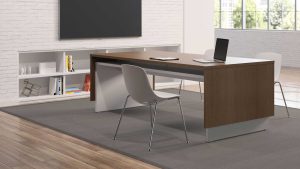
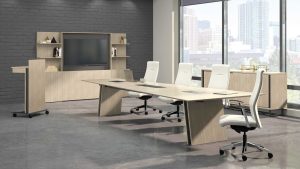
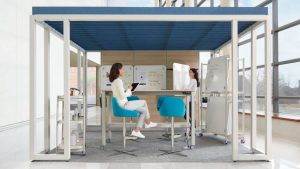
Not every meeting needs a conference room, and not every collaborative space needs four walls and a door. Whether your team is sketching out an idea on a whiteboard, gathered around a coffee table for an informal check-in, or working through a project on a table built for screen sharing, the right surface shapes how well that work actually happens. We help offices choose collaborative tables built around how teams actually use shared space, not a generic table dropped into an open floor plan.
Open offices work best when there’s a real place for people to gather, not just open floor space with no purpose. Collaborative tables give teams a dedicated spot for the work that doesn’t happen at a desk:
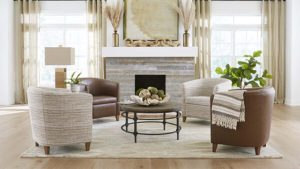
We carry a range of collaborative tables built for different types of teamwork:
A few things to think through before choosing:
We help you choose collaborative tables that fit how your team actually works, not just what looks good in a showroom. Our team consults on layout, technology needs, and group size before recommending a table, and we support delivery and installation nationwide.
Contact Pacific Ergonomics for a free consultation, and let’s find the right collaborative tables for your space.
A collaborative table is built for smaller, informal group work, like a quick brainstorm or a two- to four-person discussion. A conference table is bigger, more formal, and built for a full meeting with seating around every side.
A table with an integrated or mounted screen lets a team review work together without passing a laptop around or huddling around a single small screen. It works well for design reviews, project check-ins, or any session where the team needs to look at the same thing at once.
A huddle desk has a smaller footprint and works best for two or three people in a quick conversation. A collaboration table is built for slightly larger groups and longer working sessions.
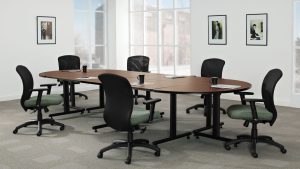
Yes. Modular tables are designed to combine or split into different shapes and sizes, so the table can scale up or down as group sizes change without buying new furniture.
These are base options you can pair with a tabletop of your choice, giving you more flexibility to customize the shape, size, and look of your collaborative table instead of choosing a single fixed design.
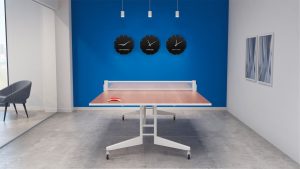
Yes. It’s built to work as a regular ping pong table for breaks and downtime, with a whiteboard surface that doubles as a brainstorming space, so the same table supports both informal recreation and collaborative work.
Coffee tables work well in lounge areas or informal meeting spots where the conversation matters more than note-taking, like a casual check-in or a space for visitors to wait comfortably.
Before you request a single quote, let us understand the business you are furnishing. A short discovery conversation tells us more than any spec sheet, and it is where every Pacific Ergonomics project begins.
"*" indicates required fields