
Why Safety Training Videos Alone Will Not Reduce Your Recordables
Safety training videos alone will not reduce risk or bring down recordables, and no EHS program should end there. A video is one piece of a program, and it only earns its place when it comes out of an assessment.
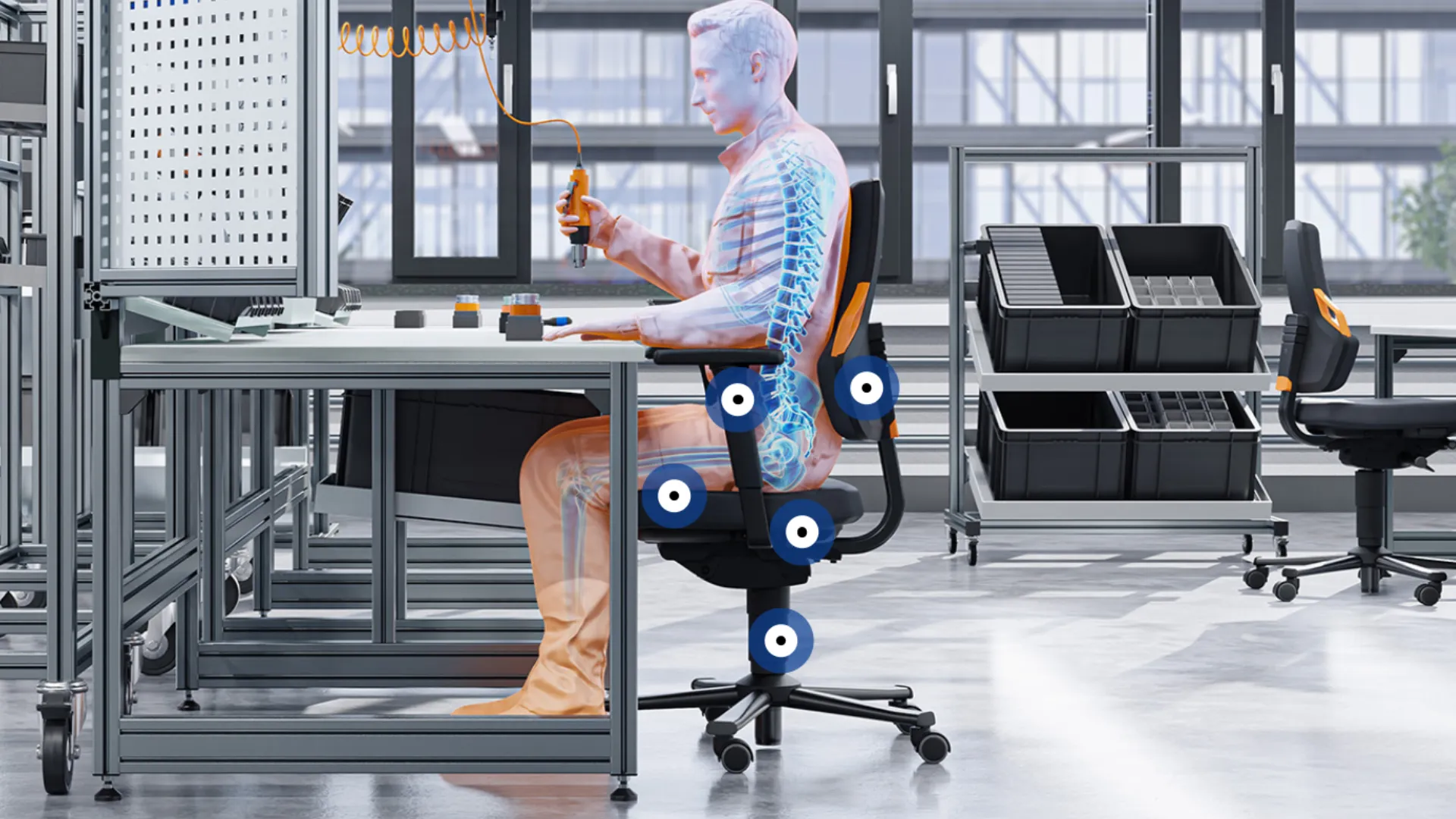
Here is what happens without one. An operator watches a generic safety training video and sees a bench that is not their bench.
- That machine is bigger than ours.
- Those are not the chairs we use.
- That bench height is nowhere near where we work.
The video ends, the guidance gets filed under does-not-apply-to-us, and the hour is gone. That is how a program posts healthy completion rates next to injury numbers that never move.
What changes behavior is training built from what an assessment actually found at that workstation. Bench height set to the elbow instead of a number. Foot ring position when a stool sits above 25″ seat height. Reach envelope at a microscope station. Load height at a pallet.
For background on the risk factors behind musculoskeletal disorders, see the OSHA ergonomics resources. To talk through where the exposure sits in your operation, contact Pacific Ergonomics.
Why Generic Safety Training Videos Get Dismissed
Very few people watch employee safety training videos for enjoyment. There has to be a reason to press play, and when a whole team gets pulled off the floor to watch together, the reason has to justify the hour.
The dismissal happens fast, and it is hard to undo. Once an employee decides the content is about somebody else’s workplace, the correct guidance inside it goes with it. You spent the hour and handed the team a reason to disregard the correction.
Where Training Content Loses People
- Nobody attends a safety meeting for entertainment. They attend because it is scheduled, it is short, and it covers the thing they touch on Monday.
- The equipment manual is complete. The one-page work instruction taped to the machine is the one people read. Coverage and use are different problems.
- A stock photo of a doctor and your own X-ray are both medically accurate. Only one changes what you do next.
- Directions to the wrong address are still correct directions. Accurate information delivered to the wrong context produces nothing.
- Everyone has sat through a new-hire orientation video. Almost nobody can tell you what was in it.
When Generic Ergonomic Training Is the Right Call
Generic content has a real job. It builds baseline awareness and creates shared vocabulary, and there are situations where the material genuinely does not vary by site.
- Regulatory and compliance baseline. Hazard communication, bloodborne pathogens, lockout/tagout awareness, fire evacuation. The standard reads the same everywhere and documented completion is the objective.
- New hire onboarding. Someone needs to know what a musculoskeletal disorder is and why early symptom reporting matters before a task-specific correction means anything.
- Standardized office populations. When a company bought one chair and one desk platform across two hundred people, general office ergonomics guidance covers most of what those employees need.
- Annual refreshers and awareness campaigns. A short reminder keeps the topic visible between assessments.
- Topics with no site variation. Driving safety, stair use, hand hygiene.
Generic training builds awareness. Task-specific training changes behavior. Most programs stop at awareness, then wonder why the loss numbers hold steady year over year. If the goal is a measurable reduction in a specific injury category, awareness content will not get you there on its own.
What Task-Specific Safety Training Videos Look Like
Every ergonomics training video below starts with a finding from an ergonomic assessment, not a topic pulled off a list. The pattern holds across every industry, and the correction is usually something the operator can make in under a minute once somebody shows it at their own station.
Laboratory and Life Sciences
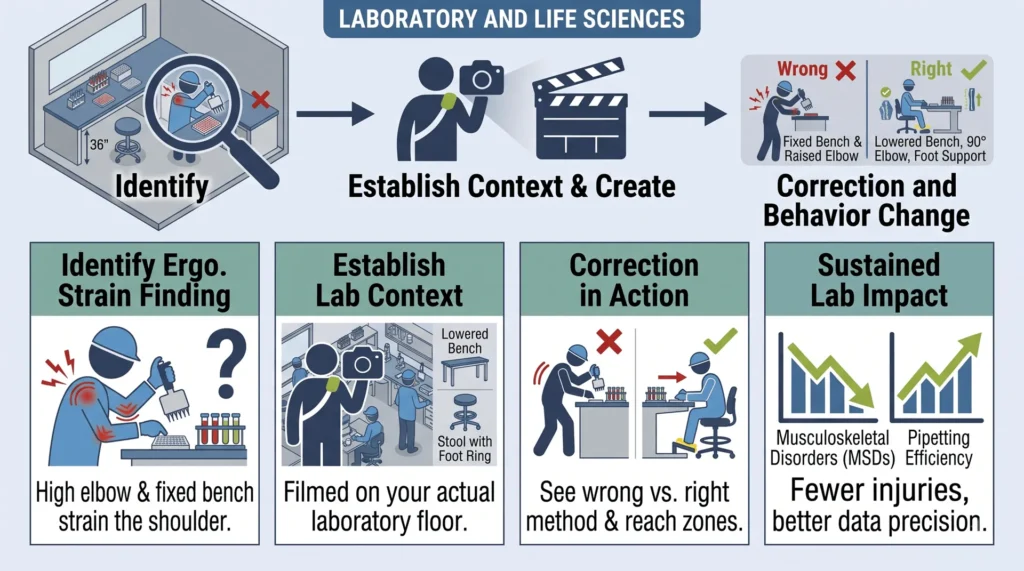
- Finding: technicians pipette with the elbow above shoulder height because the bench is fixed at 36″ and the stool will not rise far enough to compensate.
- Generic version covers: keep your elbows at ninety degrees.
- Task-specific version shows: the bench lowered for seated work, the correct stool and foot ring position, the tube rack moved inside the primary reach zone, and the rotation schedule out of repetitive pipetting.
This level of detail only surfaces during lab ergonomic assessments, where somebody watches the actual bench.
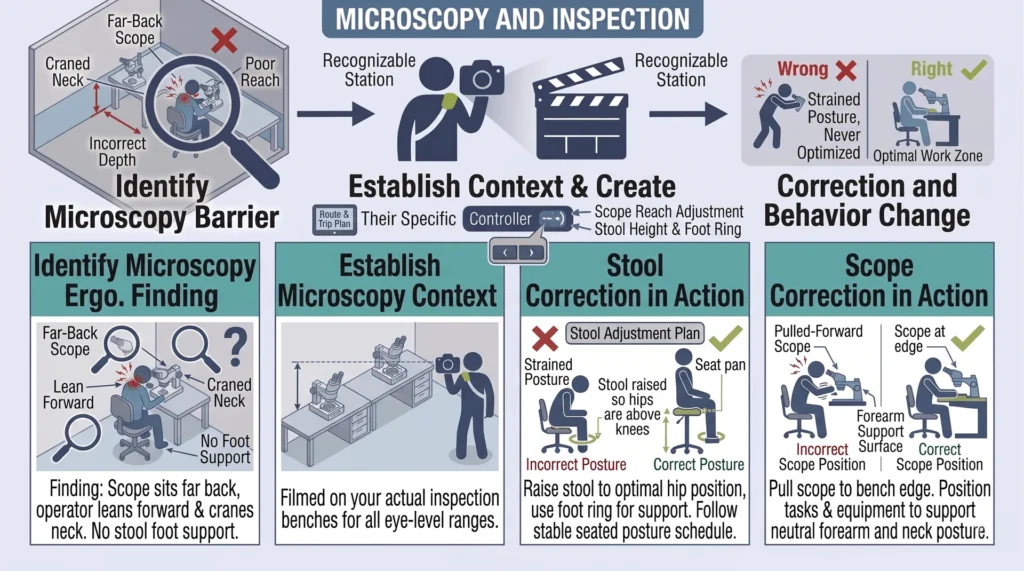
Microscopy and Inspection
- Finding: operators lean forward and crane the neck upward to reach the eyepiece, because the scope sits too far back and the stool has no foot support.
- Generic version covers: avoid awkward neck postures.
- Task-specific version shows: the scope pulled forward to the bench edge, the stool raised so hips sit above knees, the foot ring set, forearms supported on the surface. Incorrect method first, then the correction.
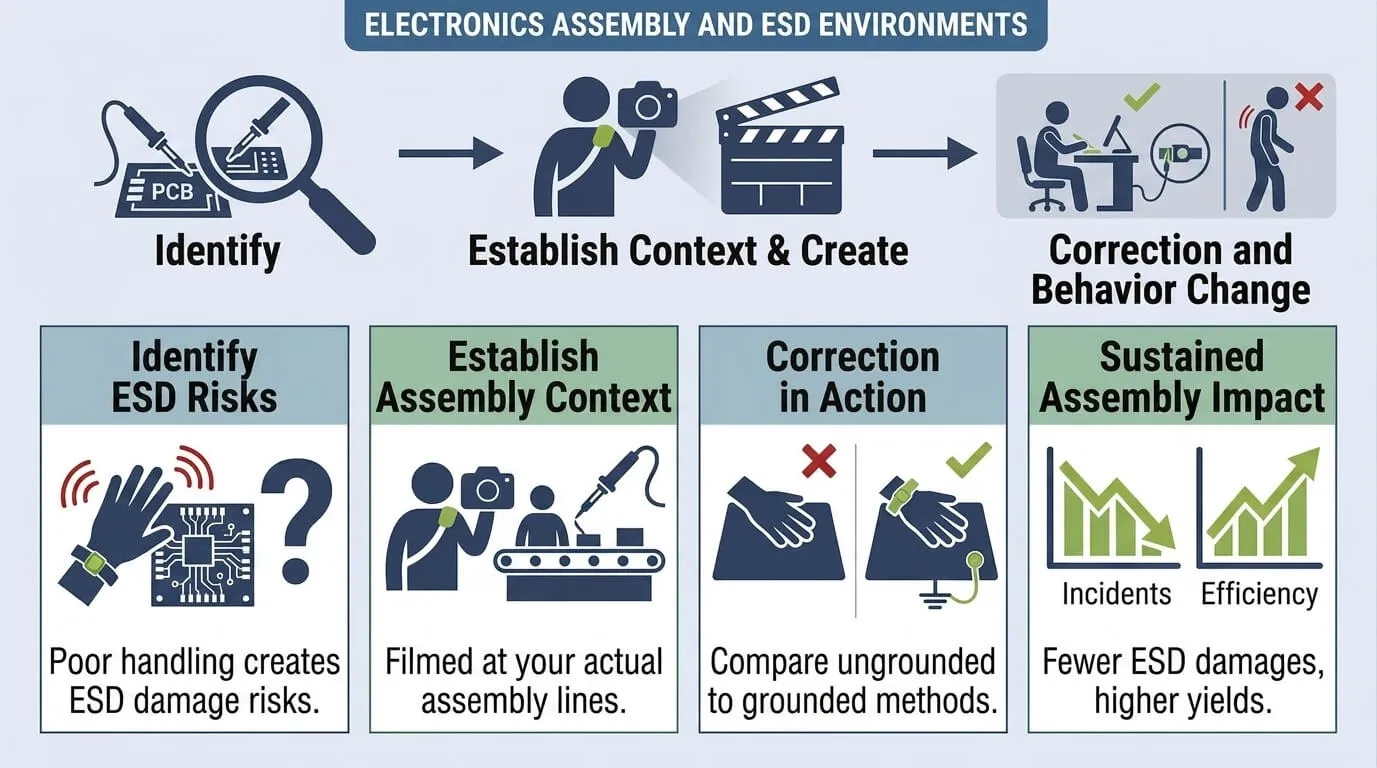
Electronics Assembly and ESD Environments
- Finding: operators rest the wrist on a hard bench edge and reach across the body for the iron. The bin rail sits above shoulder height.
- Generic version covers: reduce repetitive strain.
- Task-specific version shows: the bin rail dropped to shoulder level or below, the iron staged on the dominant side inside the reach envelope, a padded edge under the forearm, and the correct bench height for the work.
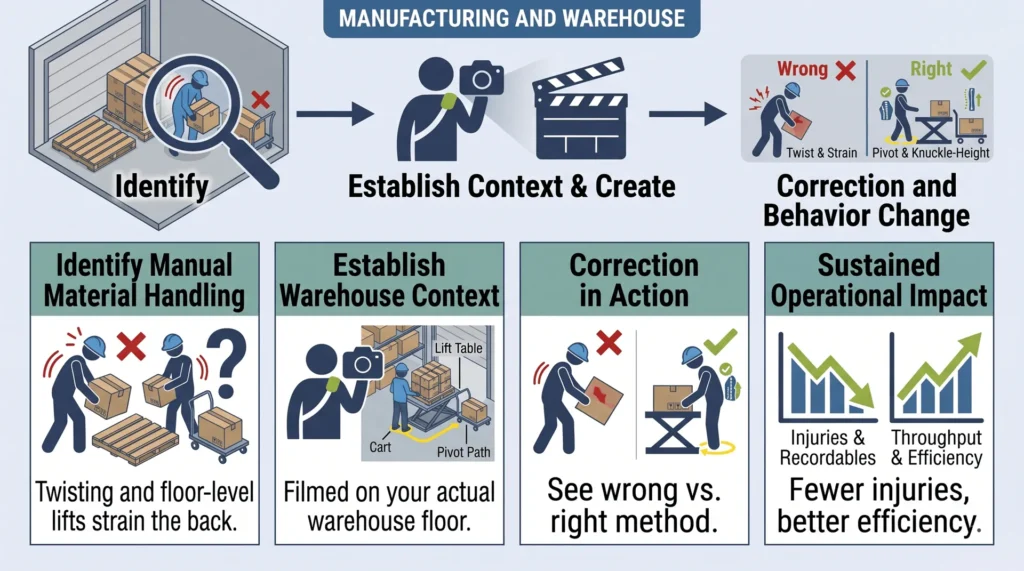
Manufacturing and Warehouse
- Finding: operators lift cases off the floor from a pallet, then twist to load a cart positioned behind them.
- Generic version covers: lift with your legs and keep your back straight.
- Task-specific version shows: the pallet on a lift table so the top row starts at knuckle height, the cart repositioned so the operator pivots the feet instead of the spine, and which lifts get engineered out rather than trained around.
Manual material handling drives so much back injury volume that an industrial ergonomic assessment usually finds several of these in a single walkthrough.
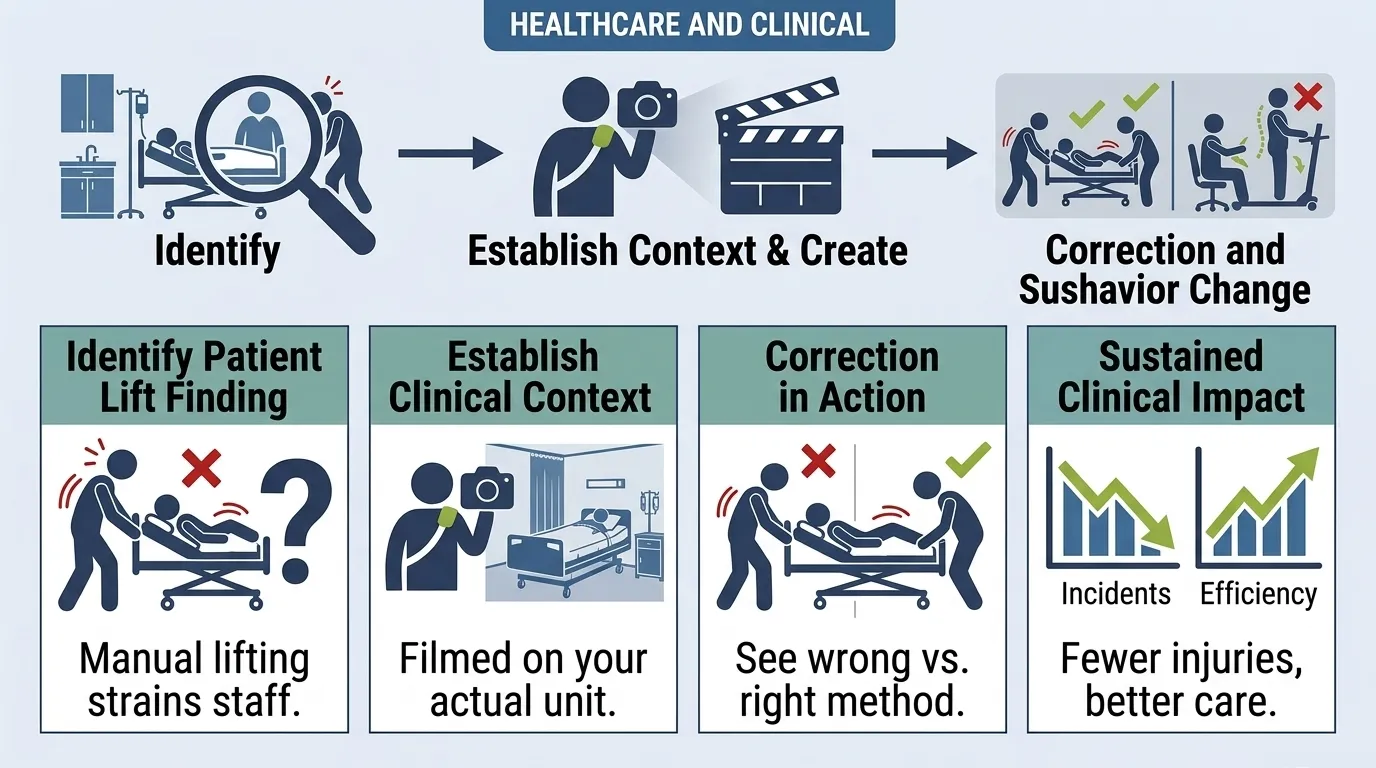
Healthcare and Clinical
- Finding: staff perform patient transfers without the lift equipment already sitting in the unit, because it adds steps and nobody demonstrated it there.
- Generic version covers: safe patient handling principles.
- Task-specific version shows: their lift, their room layout, their bed model, and the sequence that makes the equipment faster than the workaround. Filmed on the unit, with the staff who work it.
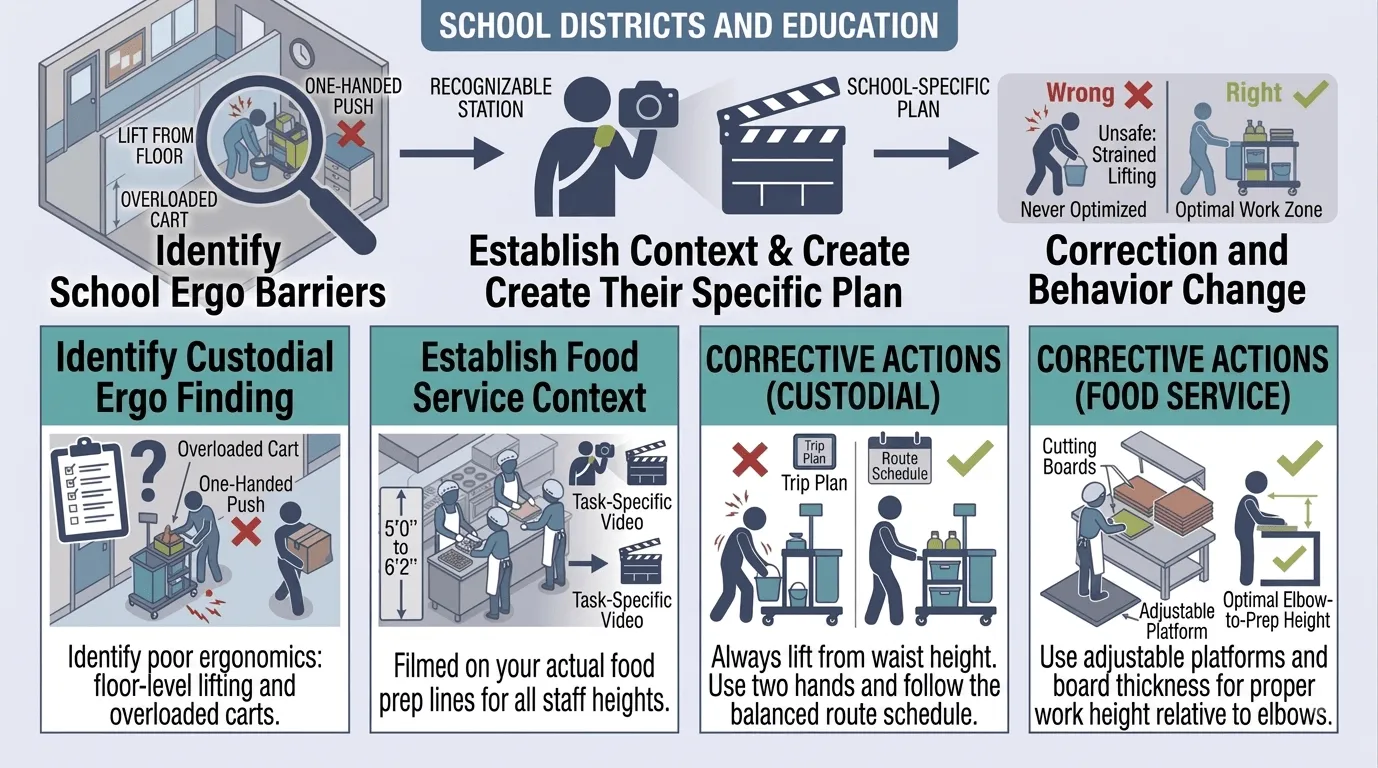
School Districts and Education
- Finding, custodial: staff load buckets and equipment at floor level, then push overloaded carts one handed while carrying a second item.
- Finding, food service: prep counters sit at one height for a staff ranging from 5’0″ to 6’2″.
- Generic version covers: safe lifting and general housekeeping.
- Task-specific version shows, custodial: their cart and supplies, the load sequence with heaviest items at waist height, two hands on the push bar, and how many trips the route actually requires.
- Task-specific version shows, food service: the anti-fatigue platform for shorter staff, cutting board thickness that drops the work surface for taller staff, and where the prep task should sit relative to the elbow.
Different exposures, different buildings, one district.
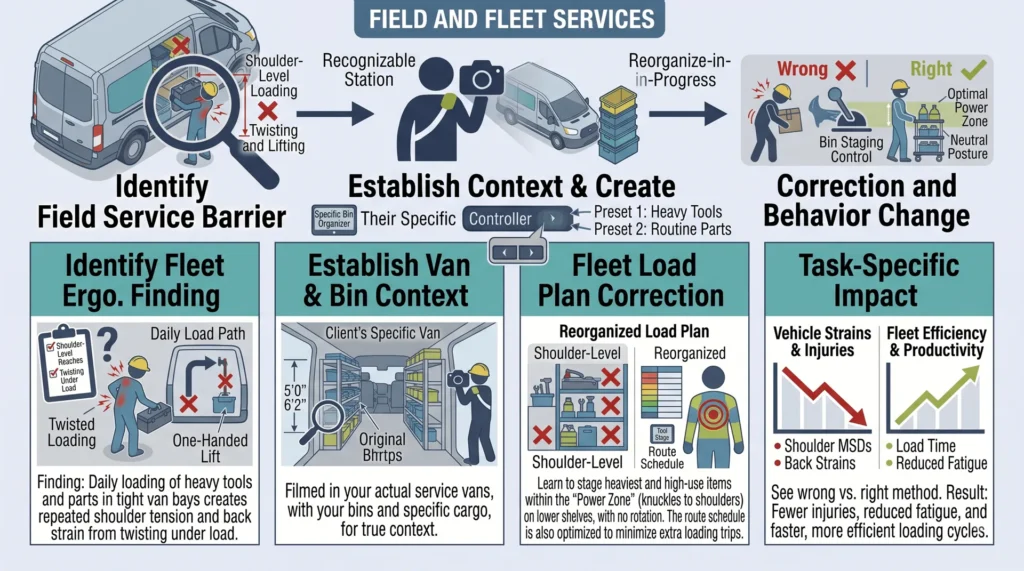
Field and Fleet Roles
- Finding: technicians load tools and parts into the same vehicle bay every day, at shoulder height, with a twist.
- Generic version covers: vehicle safety and general lifting.
- Task-specific version shows: their van, their bins, and a reorganized load plan that puts the heaviest and most frequently used items between knuckle and shoulder height with no rotation under load.
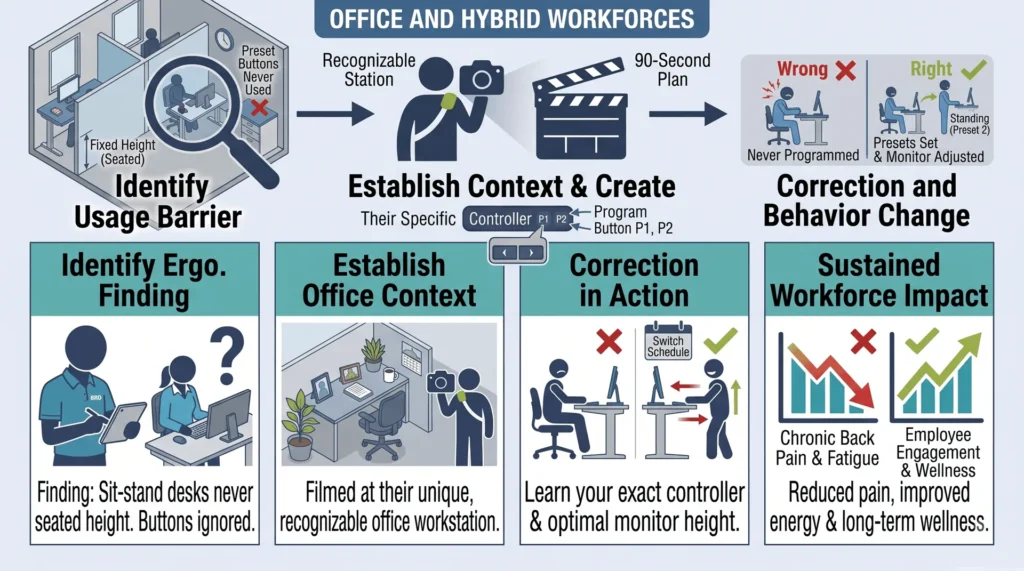
Office and Hybrid Workforces
- Finding: most sit-stand desks in the building have never left seated height. Nobody was shown the preset buttons at rollout.
- Generic version covers: the health benefits of standing desks.
- Task-specific version shows: their exact controller, how to program two presets, where the monitor lands at standing height, and when to switch during the day. Ninety seconds, filmed at a desk the employee recognizes.
The finding comes out of an office ergonomic assessment, which is what makes the video answer a real question instead of a general one.
The Finding Has to Come Before the Safety Training Video
A video without a finding behind it is content. A video produced from a documented finding is a corrective action, and it reads very differently to a risk manager, an EHS director, or an insurance carrier reviewing your program.
That sequence is worth protecting:
- Watch the task as it is actually performed, not as the procedure describes it. The gap between those two is usually where the exposure lives.
- Develop the correction at the workstation. Some findings resolve with an equipment change, some with a method change, most with both.
- Film the correction last. The video documents a fix that already exists rather than describing one in the abstract.
Run in that order, completion records show that a specific hazard was identified and corrected, which is what belongs in a schedule rating credit file or an audit response.
Work With Pacific Ergonomics
Pacific Ergonomics performs risk identification and ergonomic assessments in office, laboratory, and industrial environments nationwide. When we find a task being performed in a way that puts the operator at risk, we produce a short training video filmed at that workstation, showing the incorrect method and the corrected method side by side.
This work runs inside our managed ergonomic programs and ergonomic training programs. Tell us what your team is doing today and where the injuries have been coming from. Contact Pacific Ergonomics or call 619-546-0872.
Your people, your equipment, your product.
Employees see the station they work at and the coworkers they work beside, which removes the usual reason to dismiss the guidance.
AI production keeps the cost down.
Custom video used to mean a crew, a script, and a studio budget. We build these from on-site footage at a fraction of traditional cost, which makes a short video per task realistic instead of one long video per year.
You keep the library.
Every video is stored for future use. New hires watch the correction for their role on day one, refresher cycles pull from the same library, and it grows into a training record you own instead of a subscription you rent.