25 Years of Expertise Serving Nationwide | Showroom by Appt Only: Escondido, CA · Mon–Fri 8:30am–5pm PST |

25 Years of Expertise Serving Nationwide | Showroom by Appt Only: Escondido, CA · Mon–Fri 8:30am–5pm PST |
We outfit offices with seating for every part of the workday: task chairs for the desk, conference and training room chairs for meetings and group sessions, guest chairs for client visits, and ergonomic seating built specifically to reduce strain for employees who sit for long stretches. Every chair we carry is selected with the same question in mind: who’s actually going to sit in it, and for how long? A chair that works for a quick huddle isn’t the right fit for an eight-hour workday, and a guest chair in a private office has different requirements than seating built to survive daily wear in a training room. Our team works with EHS coordinators, facilities managers, and project leads across San Diego County and nationwide to match the right seating to the right space, backed by the same ergonomic expertise we bring to every project. Browse the categories below to find the seating that fits how your team actually works.
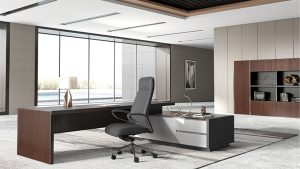
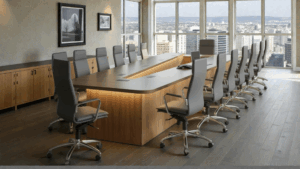
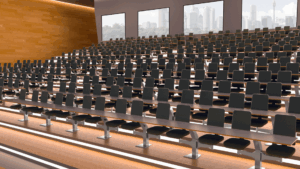
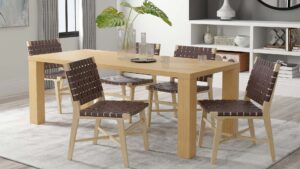
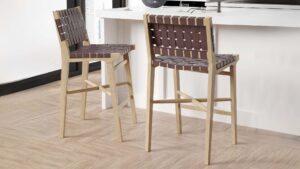
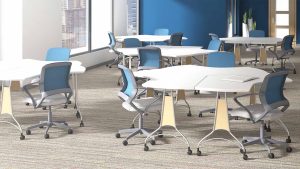
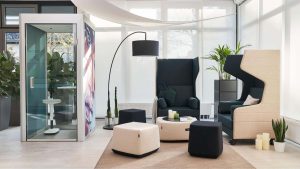
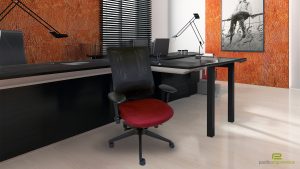
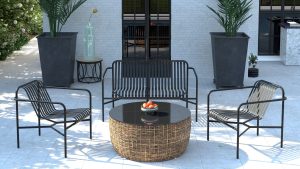
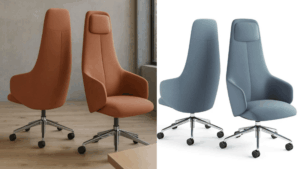
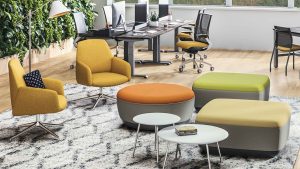
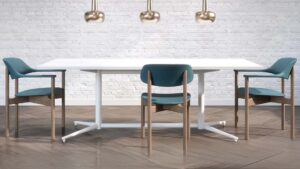
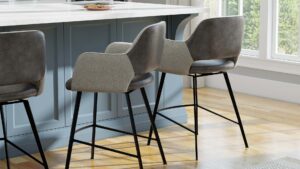
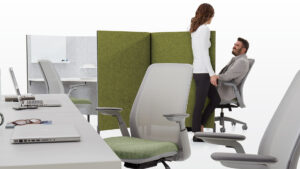
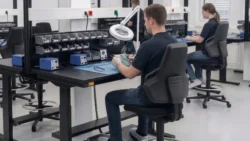
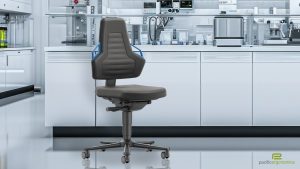
Every ergonomic chair is a task chair, but not every task chair is truly ergonomic. The difference comes down to adjustability and fit. A real ergonomic chair adjusts to match a specific person’s body (height, lumbar support, armrests) instead of offering a one-size-fits-most seat.
A quality commercial-grade chair typically lasts 7 to 10 years with daily use. Chairs in high-traffic spots like conference or training rooms tend to wear faster and may need replacing sooner depending on materials and use.
Yes. A chair built for an 8-hour workday at a desk has different requirements than a chair meant for a 30-minute meeting or a training session that gets rearranged daily. Matching the chair to how the room actually gets used matters more than picking one chair style for the whole office.
Comfort for short sit-down meetings, a size that fits the room without crowding it, and a look that matches your office. Guest chairs don’t need the full adjustability of a task chair, but they shouldn’t feel like an afterthought either.
It depends on your storage space and how often the room gets reconfigured. Stackable chairs save floor space and look cleaner; folding chairs collapse flat and work well when storage space is tight.
A properly fitted ergonomic chair supports the spine’s natural posture and reduces strain on the back, neck, and wrists. That lowers the risk of musculoskeletal disorders (MSDs) and repetitive strain injuries (RSIs) that come from sitting incorrectly for long periods.
Yes, but it needs to handle your specific climate. Coastal locations need materials that resist salt air and moisture, while inland spaces need furniture that holds up to heat and sun exposure without fading or breaking down.
Before you request a single quote, let us understand the business you are furnishing. A short discovery conversation tells us more than any spec sheet, and it is where every Pacific Ergonomics project begins.
"*" indicates required fields