Insights
Every insight article here comes from real projects. Pacific Ergonomics has spent 25+ years outfitting workplaces across San Diego County and nationwide, and this is where we write down what we learn. Most posts are authored by Kirstie Anne Berzanski, our Principal and CEO, based on direct work with more than 100 corporate clients, from small medical offices to the Fortune 500. Expect specifics: why the chair you pick determines how many people fit at your conference table, and how uncomfortable lab seating drives employee turnover. Browse by topic below, or call 619-546-0872 if you’d rather talk through your project.
-

Office Fit-Out Mistakes That Cost Time and Money
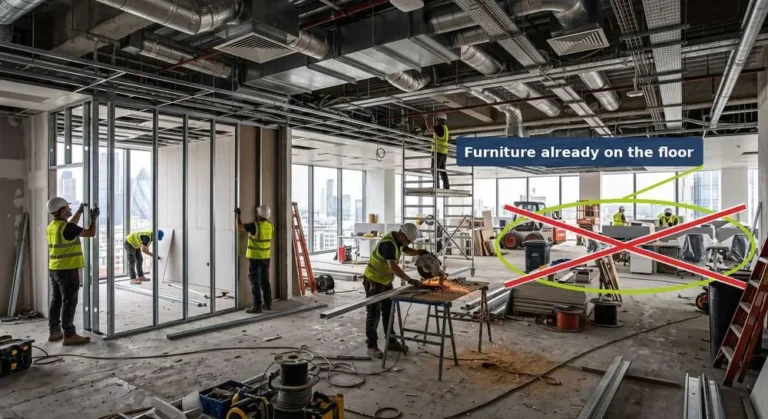
Short Answer Most office fit-out problems trace back to decisions made before a single piece of furniture is ordered. The costly ones are a skipped needs analysis, a late start, an electrical plan set without the furniture layout, and furniture delivered into a site that is not finished. An office fit-out turns a bare or… -

Commercial Grade Furniture – What Businesses Need to Know
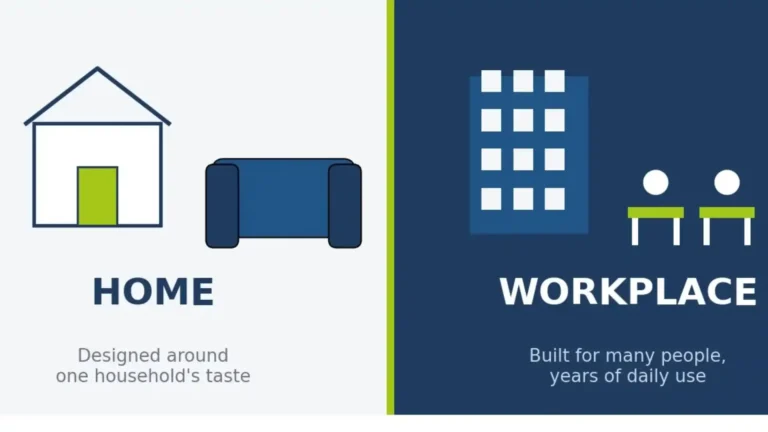
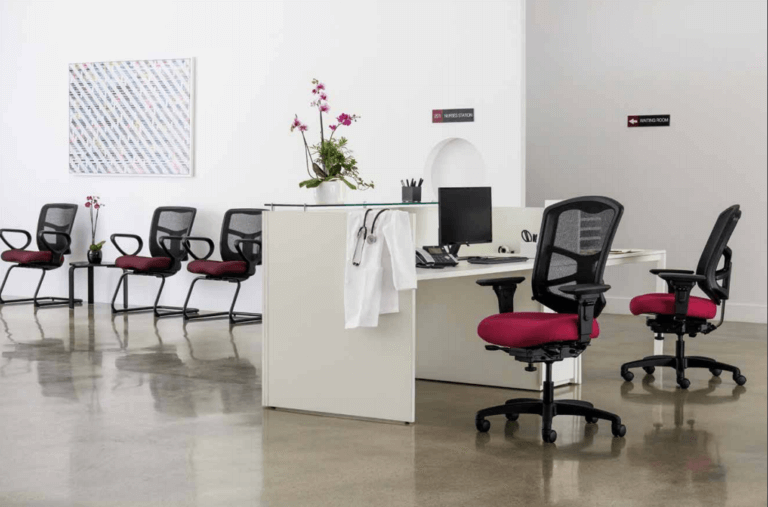
The Short Answer Commercial grade furniture is built to hold up to daily use by many different people over years of service, and it’s tested and warrantied to prove it. Commercial grade furniture and the furniture you buy for your home can look alike on the showroom floor. They’re built for very different jobs. We’ve… -
The Real Cost of Skipping a Workplace Ergonomics Program
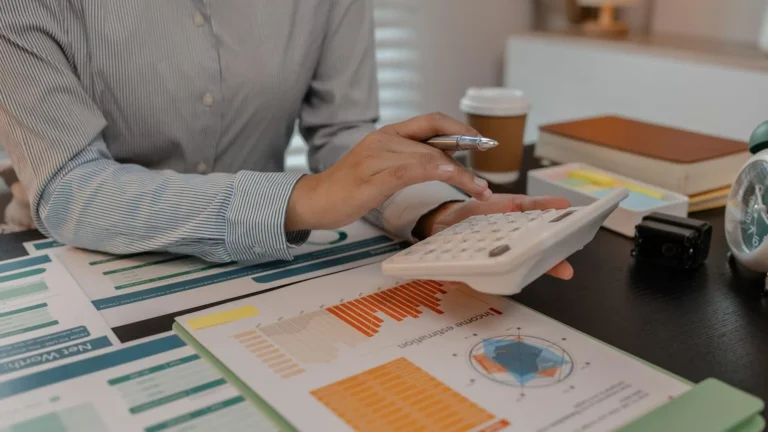
The cost of workplace injuries rarely shows up as one line item. It hides in duplicate purchases, wasted hours, and chairs that get replaced within the first year. An office ergonomics program exists to catch all of that before it happens — one approved way to seat people, instead of a decision made from scratch… -

Why Safety Training Videos Alone Will Not Reduce Your Recordables
Safety training videos alone will not reduce risk or bring down recordables, and no EHS program should end there. A video is one piece of a program, and it only earns its place when it comes out of an assessment. Here is what happens without one. An operator watches a generic safety training video and sees… -
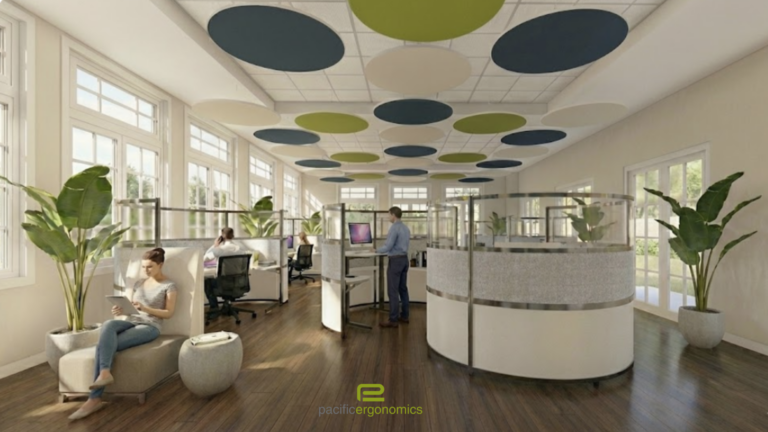
Call Center Cubicles Don’t Have to Look Like Call Center Cubicles
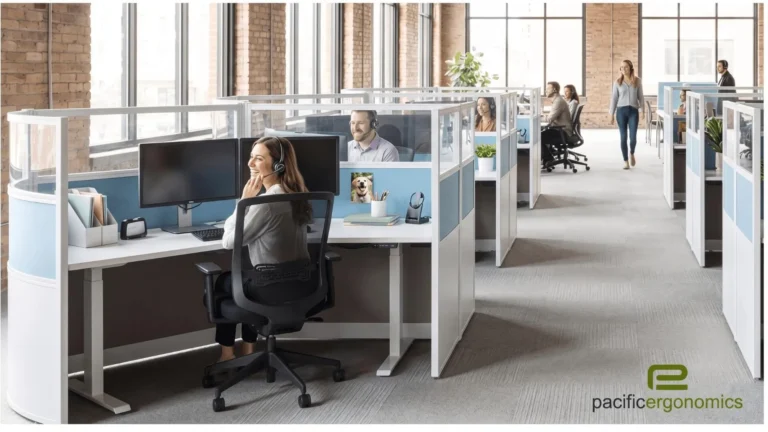
Most call center floors look the same. Low panels, grey fabric, fluorescent overhead lighting, narrow aisles that feel like corridors in a building nobody chose to be in. Agents know it. Managers know it. And somewhere in the back of every leader’s mind is the nagging question of whether the space itself is part of… -

Ergonomic Seating Program: Why One-Size Task Chairs Fail
Most companies inherit a workplace seating standard the same way they inherit office paint colors. One model. One size. Hundreds of bodies. -
Ergonomic Office Furniture Selection: When Aesthetics Fail Anatomy
True ergonomic office furniture selection is not a clinical compromise. It is a measurable strategic asset that drives cognitive performance, talent retention, and risk mitigation across the workforce. Your workspace is the most tangible signal of your corporate culture. But if your ergonomic office furniture only looks good in a brochure, you are actively sabotaging… -
How to Build a Home Office Ergonomic Program That Improves Productivity, Reduces Claims and Retains Top Talent
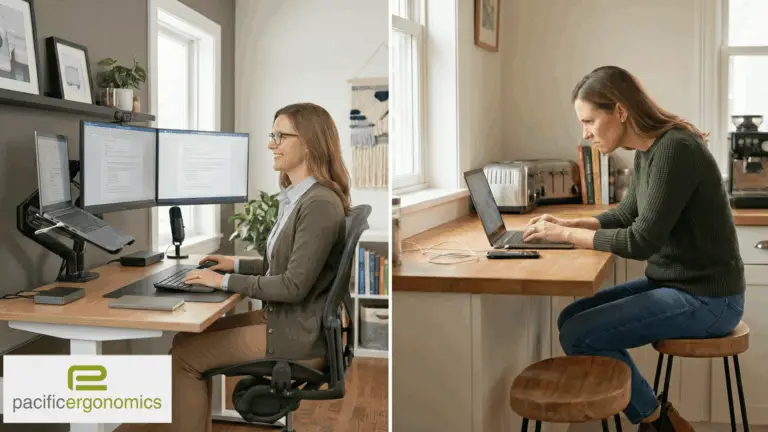
FOR EHS, HR, AND C-SUITE LEADERS A practical framework for the EHS, HR, and C-suite leaders building corporate home office ergonomic programs that deliver measurable business outcomes. The patterns and recommendations below are amassed from direct experiences of Pacific Ergonomics across more than 100 corporate clients with companies of all types and sizes, including healthcare,… -

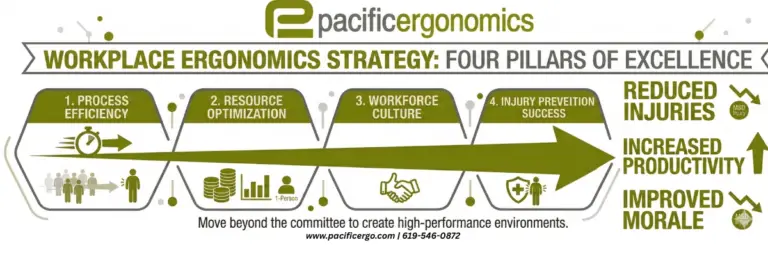
A Modern Workplace Ergonomics Strategy: Delivering High-Performance Environments and Eliminating Bureaucracy
In the modern corporate landscape, a successful workplace ergonomic strategy isn’t defined by the thickness of a safety manual or a “check box” proving that employees have received some type of online ergonomic training. True corporate ergonomic excellence is measured by operational efficiency, resource optimization, the promotion of employee goodwill, all of which leads to… -
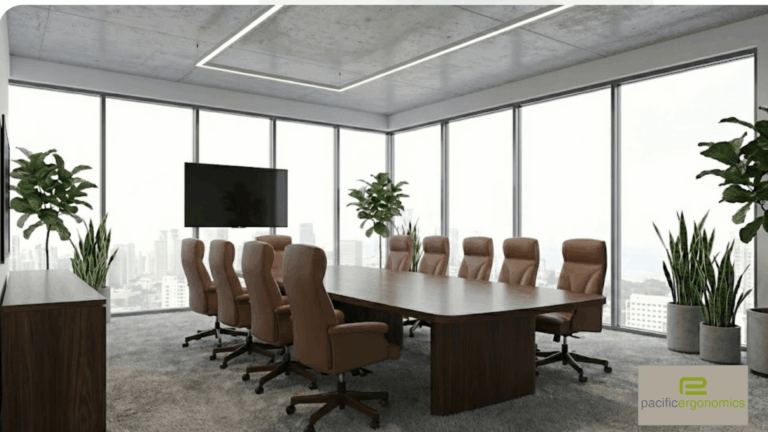
Why the Conference Chair You Pick Determines How Many People Fit at the Table
Conference room chair spacing is one of the most overlooked factors in conference room design. The table gets all the attention. But the chair determines how many people actually fit around it. A 12-foot conference table does not automatically seat 12 people. It might seat 10 with executive chairs. Or 14 with armless side chairs…. -
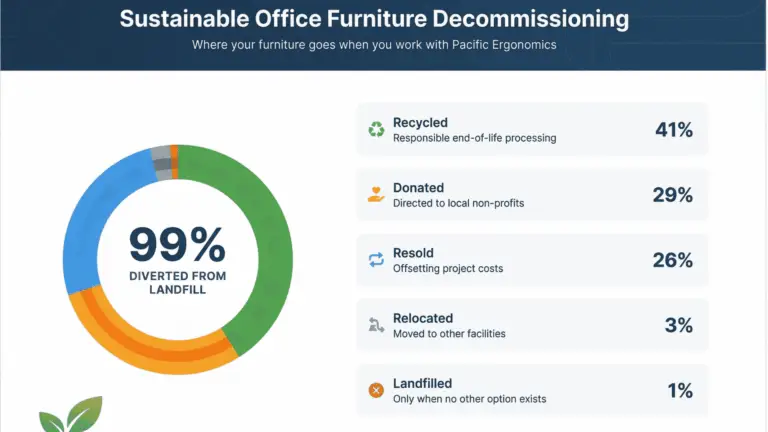
Sustainable Office Furniture Decommissioning: 8.5 Million Tons Go to Landfills Every Year. There Is a Better Way.
Every year, 8.5 million tons of office furniture end up in landfills across the United States. That number comes from the Environmental Protection Agency. It costs American businesses over $450 million annually just in landfill tipping fees. Let that sink in………………80% of decommissioned commercial furniture goes straight to a dump. This is staggering. Why Companies… -
Modern Office Furniture Selection: When Aesthetics Fail Anatomy
True modern office furniture is not simply a visual style. Instead it reflects thoughtful modern office workstation design, where aesthetics, ergonomics, and workspace planning work together to support employee performance. Your workspace is the most tangible signal of your corporate culture. But if your “modern” office furniture only looks good in a brochure, you are…